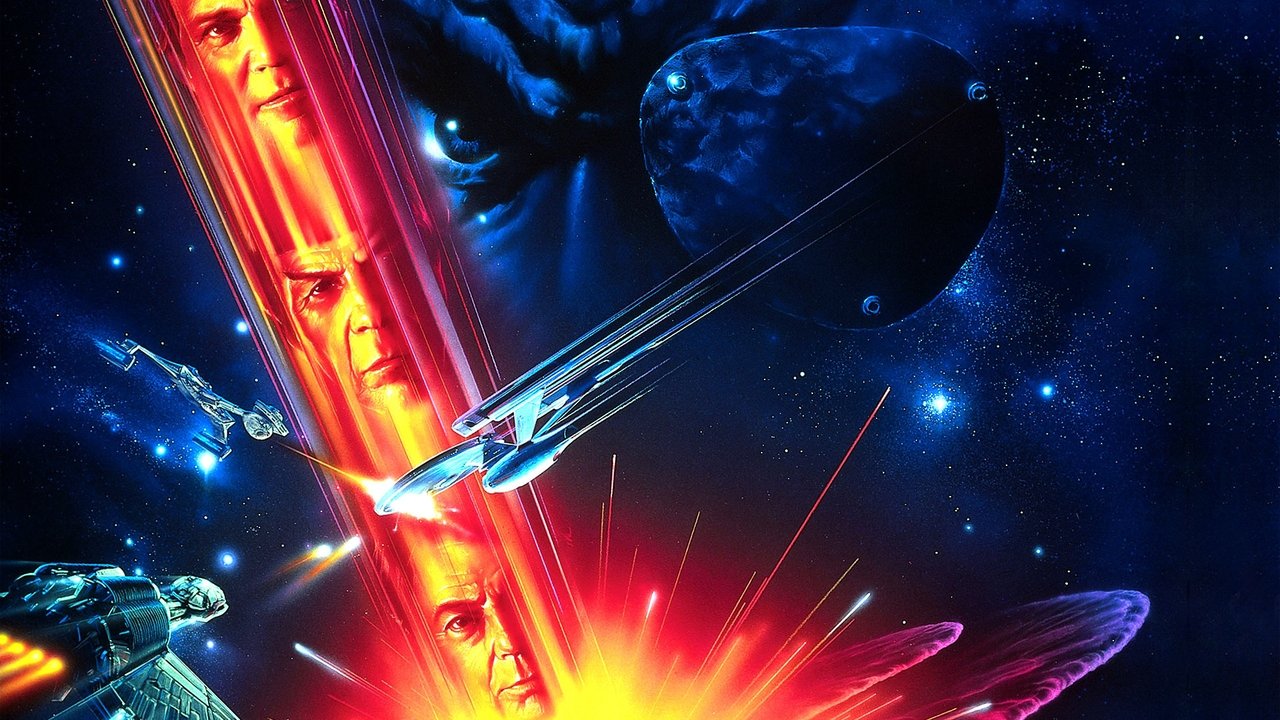
After the poor performance of Star Trek V: The Final Frontier, the next installment was initially conceived as a prequel called The Academy Years, featuring younger actors playing Kirk and Spock at Starfleet Academy, but negative reaction from the original cast and fans led to the idea being scrapped.
Actor Walter Koenig pitched an alternate script outline called 'In Flanders Fields' in which the Romulans join the Federation to fight the Klingons and the original crew, except Spock, are forced to retire; this idea was not used.
The film's central concept came from Leonard Nimoy suggesting to director Nicholas Meyer, 'What if the Wall comes down in outer space?', comparing the Klingons to the Soviet Union; Meyer immediately improvised the idea of an 'intergalactic Chernobyl' that spelled the end of the Klingon Empire.
An elaborate opening sequence showing each crew member's unhappy retirement (Spock playing Polonius in a Vulcan Hamlet, Sulu driving a taxicab, Kirk married to Carol Marcus, etc.) was written but cut because the exotic locations would have pushed the budget to $50 million.
Star Trek creator Gene Roddenberry, despite being in poor health, strongly disliked the script; his first meeting with Meyer ended with Meyer storming out after only five minutes, and Meyer clashed with him over the villainization of the character Saavik.
The traitor role eventually played by a new character, Valeris (Kim Cattrall), was originally intended to be the returning character Saavik, but Gene Roddenberry objected to turning a fan-favorite character into a villain.
Kim Cattrall had auditioned to play Saavik in earlier films but was reluctant to be the third actress in that role; she accepted once the character was rewritten as the new, distinct Valeris.
DeForest Kelley, then 71, was paid $1 million for his role as McCoy, his final live-action performance before his 1999 death, thanks to Leonard Nimoy serving as executive producer.
The role of Chancellor Gorkon was first offered to Jack Palance before David Warner was cast; Warner's Klingon makeup was deliberately designed to resemble Abraham Lincoln to humanize the character.
Nichelle Nichols refused to deliver two lines she felt carried racial undertones, including 'Guess who's coming to dinner' (which was reassigned to Chekov) and a line about a daughter marrying a Klingon, which was cut entirely.
Christopher Plummer, who had previously acted alongside William Shatner in Montreal, was initially reluctant to accept the role of Chang, which Nicholas Meyer wrote specifically for him.
Kim Cattrall took part in an unauthorized photo shoot on the empty Enterprise bridge wearing only her Vulcan ears; when Leonard Nimoy found out, he tore up the photographs fearing damage to the franchise's reputation.
The film marked the first canonical use of Hikaru Sulu's first name onscreen, a detail originally introduced in Vonda McIntyre's 1981 novel The Entropy Effect and inserted into the script after comic book writer Peter David convinced Meyer to include it.
Because there was no available soundstage space at Paramount, the Starfleet Headquarters set was built at the Hollywood Presbyterian Church, several blocks from the studio.
A second unit filmed exterior Rura Penthe glacier scenes in Alaska in temperatures as low as −50°F (−46°C), accessible only by helicopter, with camera batteries draining within minutes.
The underground prison scenes were filmed in real caves at Griffith Park's Bronson Canyon, the same location used for the Batcave and the 1930s Flash Gordon serial.
During the blue-dyed alien food dinner scene, none of the actors wanted to eat the unappetizing dishes under hot studio lights, so director Nicholas Meyer offered a $20 bounty for every shot of an actor eating; William Shatner was the only cast member willing to eat the purple-dyed squid.
To simulate a Klingon courtroom filled with spectators, effects artists used two hundred Worf dolls rocked by motors and waving red-lit sticks, creating a miniature set 10 feet long inspired by a scene in Ben-Hur.
Because Paramount reused old ship models to save money, the Enterprise-A model (in use since 1979) had its hairline cracks puttied and circuitry redone, but the repainting process caused the loss of its original pearlescent finish.
During filming of Gorkon's death scene, a large lamp exploded and rained debris on David Warner and DeForest Kelley; one piece narrowly missed Warner's head, which Kelley believed could have killed him.
Prop maker Greg Jein, who had built the alien mothership for Close Encounters of the Third Kind, hid references to other franchises in his props, including parts from Buck Rogers and Buckaroo Banzai.
Star Trek VI is the only Star Trek film to win the Saturn Award for Best Science Fiction Film, and it earned two Oscar nominations, for Best Makeup and Best Sound Effects.