


No connection

Minority Report

Everybody runs.

2002 · 145 min · Science Fiction
7.9 Modest
Science Fiction Action Thriller

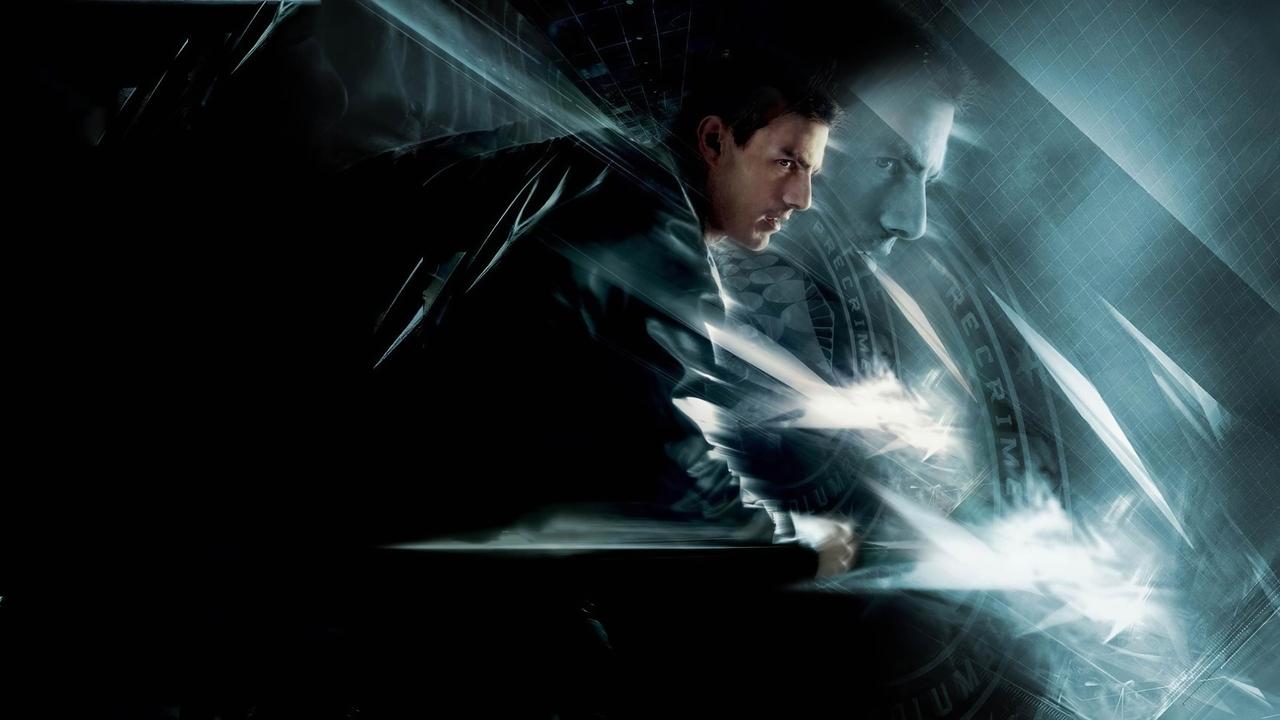
John Anderton is a top 'Precrime' cop in the late-21st century, when technology can predict crimes before they're committed. But Anderton becomes the quarry when another investigator targets him for a murder charge.

Trivia & behind the scenes

/
Origins

The film began in 1992 as a planned sequel to Total Recall (1990), with Arnold Schwarzenegger set to reprise his role, before Carolco Pictures went bankrupt and the project was reworked into a standalone story.

Origins

Novelist Jon Cohen was hired in 1997 to write a script originally meant to be directed by Dutch filmmaker Jan de Bont, and Tom Cruise passed the script to Steven Spielberg, who felt it needed further development.

Origins

Screenwriter Scott Frank reworked Cohen's draft, removing the character of Senator Malcolm and adding Lamar Burgess as the villain, while also rewriting Danny Witwer from a villain into a heroic character closer to his role in the original short story.

Origins

Because the original screenplay bore similarities to an earlier draft by Gary Goldman and Ron Shusett, a Writers Guild arbitration was held; Goldman and Shusett did not receive writing credit but were listed as executive producers.

Casting

Spielberg originally wanted a different supporting cast, offering roles to Matt Damon (Witwer), Meryl Streep (Iris Hineman), Ian McKellen (Burgess), Cate Blanchett (Agatha), and Jenna Elfman (Lara); all declined or dropped out due to scheduling conflicts, and Javier Bardem also turned down the Witwer role.

Casting

Cameron Diaz, Cameron Crowe, and Paul Thomas Anderson make uncredited cameo appearances as subway passengers in the film.

Filming

To keep the budget under $100 million, Cruise and Spielberg agreed to forgo upfront salaries in favor of each taking 15% of the film's gross profits.

Filming

Minority Report was the first film to use an entirely digital 'previz' (previsualization) production design process, employing Photoshop and 3D animation software like Maya and XSI to plan shots before filming.

Effects

Visual effects supervisor Henry LaBounta designed the spider-like 'Spyder' robots by drawing inspiration from deep-sea jellyfish, giving them bioluminescent-style lights running along their tentacle-like legs.

Effects

Cinematographer Janusz Kamiński shot the film in high-speed Super 35 to increase grain and used a bleach bypass process in post-production, reducing color saturation by about 40% to give the film its distinctive washed-out, film-noir look.

Music

Composer John Williams drew inspiration from Bernard Herrmann's film noir scores rather than typical science fiction music, and incorporated classical pieces by Schubert, Haydn, and Tchaikovsky, though Williams said the studio chose those classical selections.

References

Spielberg convened a three-day 'think tank summit' in 1999 with fifteen experts, including architects, computer scientists, and futurists, to help design a scientifically plausible vision of the year 2054 rather than a typical sci-fi setting.

Memorable quotes

/

The system is perfect until it comes after you.

Tagline The core premise of Precrime: perfect until it targets an innocent.

Everybody Runs

Tagline Main marketing slogan capturing the thriller's central action.

We don't choose the things we believe in; they choose us.

Lamar Burgess Philosophy of determinism vs. free will in the Precrime system.

You still have a choice.

Agatha Challenging the notion that the future is predetermined.

The Future Can Be Seen. Murder Can be Prevented. The Guilty Punished Before the Crime is Committed. The System is Perfect. It's Never Wrong. Until It Comes After You.

Tagline Complete description of the Precrime system and its fatal flaw.

Sometimes, in order to see the light, you have to risk the dark.

Dr. Iris Hineman Metaphorical wisdom about taking risks to uncover truth.

You Can't Hide

Tagline Tagline emphasizing inescapability within the Precrime system.

What would you do if you were accused of a murder you had not committed … yet?

Tagline Tagline posing the central moral question of the film.

In the middle of the Civil War, for example, Abraham Lincoln suspended the writ of habeas corpus observing that a limb may be sacrificed to save a life, but a life is never wisely given to save a limb.

John Anderton Historical reference justifying sacrificing individual liberty for security.

How the community felt

😵 Shocked 100%
😤 Frustrated 50%
😭 Sad 50%

What people are saying (1)

Log in to share your take.

T

Torrezno

1 week ago

Review ★ 7

La parte metafísica de "sí conoces tu futuro puedes cambiarlo" me parece el mayor acierto de la película. La ambientación y detalles como los anuncios personalizados son muy chidos pero el conjunto me deja un poso tan grande de impersonalidad y de frialdad que hace que al final solo empatice con la zagala y Tom me la sude mucho. Spielberg Spielbergando.

Read the review


New version available

A Seenr update was just released. Reload to get it.