
No connection

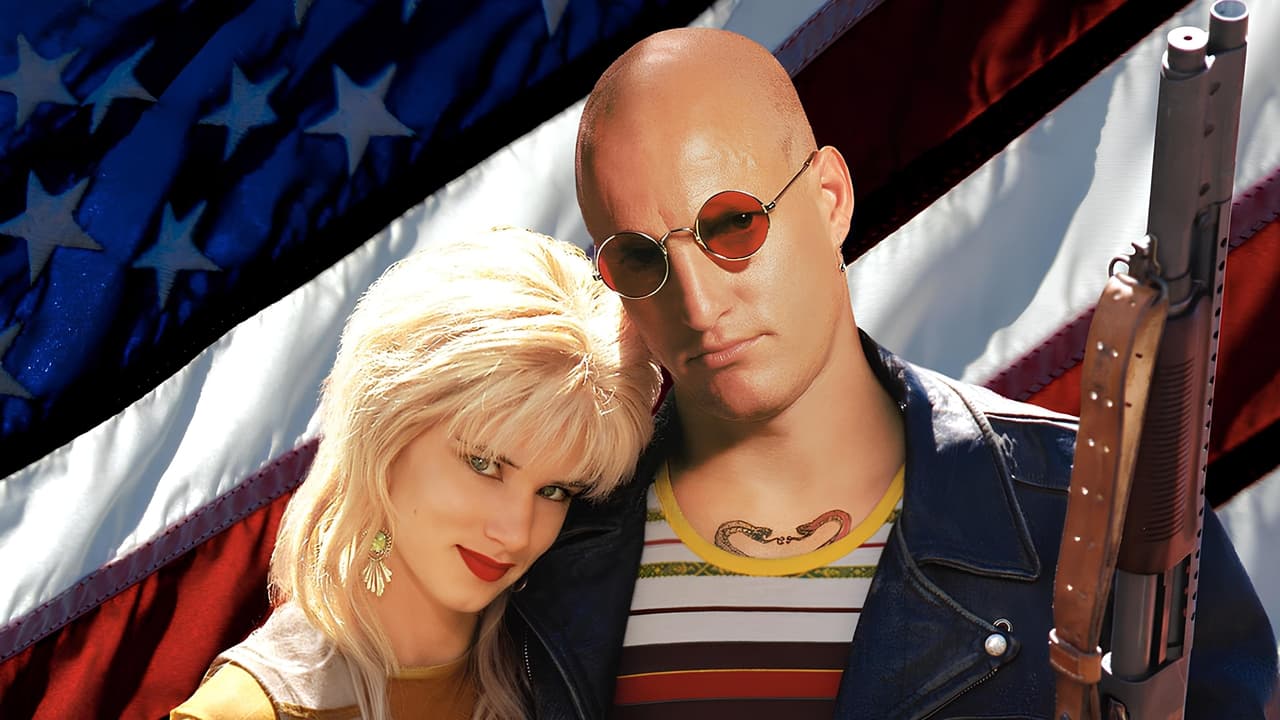
Natural Born Killers

The media made them superstars.

1994 · 118 min · Crime
7.1 Modest
Crime Thriller Drama

Two victims of traumatized childhoods become lovers and serial murderers irresponsibly glorified by the mass media.

Country of origin
🇺🇸 United States
Year
1994

Trivia & behind the scenes

/
Origins

The film was based on an original screenplay by Quentin Tarantino, who had sold an option for his script to producers Jane Hamsher and Don Murphy for $10,000 after failing to raise $500,000 to direct it himself.

Origins

The script was so heavily rewritten by Oliver Stone, David Veloz, and Richard Rutowski—shifting focus from journalist Wayne Gale to Mickey and Mallory—that Tarantino received only a story credit and later disowned the film, saying 'I hated that fucking movie.'

Origins

Oliver Stone initially envisioned the project as a straightforward action film 'something Arnold Schwarzenegger would be proud of,' but shifted its tone to a dark media satire after being influenced by real-life media circuses like the O.J. Simpson case, the Menendez brothers trial, and the Tonya Harding/Nancy Kerrigan incident.

Casting

Woody Harrelson, then known mainly for his comedic role on the sitcom Cheers, was deliberately cast against type because Stone felt he had an 'American, trashy look' evoking Kentucky or white trash.

Casting

Stone wanted Juliette Lewis to gain muscle mass to look tougher as Mallory, but she refused, wanting her character to appear more like a pushover than a bodybuilder.

Casting

Robert Downey Jr. prepared for his role as tabloid reporter Wayne Gale by spending time with Australian shock-TV host Steve Dunleavy, and later convinced Stone to let him play the character with an Australian accent.

Casting

Stand-up comedian Rodney Dangerfield, cast as Mallory's abusive father, was allowed by Stone to rewrite all of his own character's lines.

Filming

Principal photography took 56 days, including scenes filmed at the Rio Grande Gorge Bridge near Taos, New Mexico for the wedding scene, and at Stateville Correctional Center in Joliet, Illinois for the prison riot, where real inmates served as extras for the first two weeks using rubber weapons.

Filming

According to Tom Sizemore, Oliver Stone blasted African tribal music at full volume between takes on the prison set to keep the cast's energy frantic.

Filming

While filming a POV shot of Mallory running into a wire mesh, director of photography Robert Richardson broke his finger and his replacement cameraman cut his eye, leading Stone to joke he wasn't popular with the camera department that day.

Filming

An alternate ending was filmed in which Mickey and Mallory are shot dead by Arliss Howard's character, but Stone discarded it because he felt the 1990s were 'a time when the bad guys got away with it.'

References

The famous Coca-Cola polar bear ad appears twice in the film; according to Stone, Coca-Cola approved its use without fully understanding the film's content and was furious after seeing the finished product.

Effects

The film's editing took roughly 11 months and resulted in nearly 3,000 cuts, compared to the 600–700 typical of most films, contributing to its frenzied visual style featuring Dutch tilts, mixed film stocks, and animation directed by Mike Smith.

Music

Trent Reznor of Nine Inch Nails produced the soundtrack alongside Stone and reportedly watched the film over 50 times to 'get in the mood,' producing much of it while on tour and writing the original song 'Burn' for the film.

Reception

The film grossed $110 million worldwide against a $34 million budget and was named the eighth most controversial film in history by Entertainment Weekly in 2006.

Reception

The film has been linked by critics and media to real-life 'copycat' crimes, including the 1997 Heath High School shooting and the Columbine High School massacre, whose perpetrators reportedly used the code name 'NBK' (Natural Born Killers) for their attack.

Reception

The MPAA initially threatened the film with an NC-17 rating, prompting Stone to cut about four minutes of violent footage to secure an R rating; a fuller Director's Cut was later released on home video.

Reception

The film was banned in Ireland and the Philippines, and its UK home video release was cancelled in 1996 following the Dunblane massacre, with the video eventually released in July 2001.

Memorable quotes

/

You know, the only thing that kills the demon... is love.

Mickey Knox After a killing spree, reflecting on love and darkness

Dwight McClusky. Welcome to hell.

Dwight McClusky When meeting the young killers

What people are saying (0)

Log in to share your take.

No reviews yet.

Nothing yet. Start the conversation!

New version available

A Seenr update was just released. Reload to get it.