The film was based on Murray Burnett and Joan Alison's unproduced play Everybody Comes to Rick's, which Warner Bros. story editor Irene Diamond convinced producer Hal Wallis to buy in January 1942 for $20,000, the most anyone in Hollywood had ever paid for an unproduced play.
The play was inspired by a 1938 European trip by Murray Burnett, who visited Vienna shortly after the Anschluss and was affected by the antisemitism he witnessed, and later visited a multinational nightclub in the south of France that included a prototype of the Sam character.
The project's title was changed to Casablanca apparently in imitation of the 1938 hit film Algiers, and the film shares narrative and thematic similarities with that movie and its source, Pépé le Moko.
Actresses considered for the role of Ilsa before Ingrid Bergman was cast included Ann Sheridan, Hedy Lamarr, Luise Rainer, and Michèle Morgan; Wallis obtained Bergman, who was under contract to David O. Selznick, by lending Olivia de Havilland in exchange.
Paul Henreid was reluctant to play Victor Laszlo, fearing it would 'set him as a stiff forever,' and only agreed once he was promised top billing alongside Bogart and Bergman; he did not get along well with his co-stars, calling Bogart 'a mediocre actor' while Bergman called him a 'prima donna'.
Conrad Veidt, who played Nazi Major Strasser, was in real life a refugee German actor who had fled the Nazis with his Jewish wife, yet frequently played Nazis in American films; he was the highest-paid cast member despite second billing and died shortly after the film's release.
Many of the film's extras and minor cast members playing refugees were themselves real European exiles who had fled the Nazis, and a witness to filming the 'duel of the anthems' scene said he saw many of these actors crying because they were genuine refugees.
Leonid Kinskey, who played the bartender Sascha, was cast partly because he was Bogart's drinking buddy, and only got the role after original choice Leo Mostovoy was deemed not funny enough.
Filming ran from May 25 to August 3, 1942, entirely at Warner Bros. Studios in Burbank except for a sequence at Van Nuys Airport, and the movie was shot largely in sequence because only the first half of the script was ready when filming began.
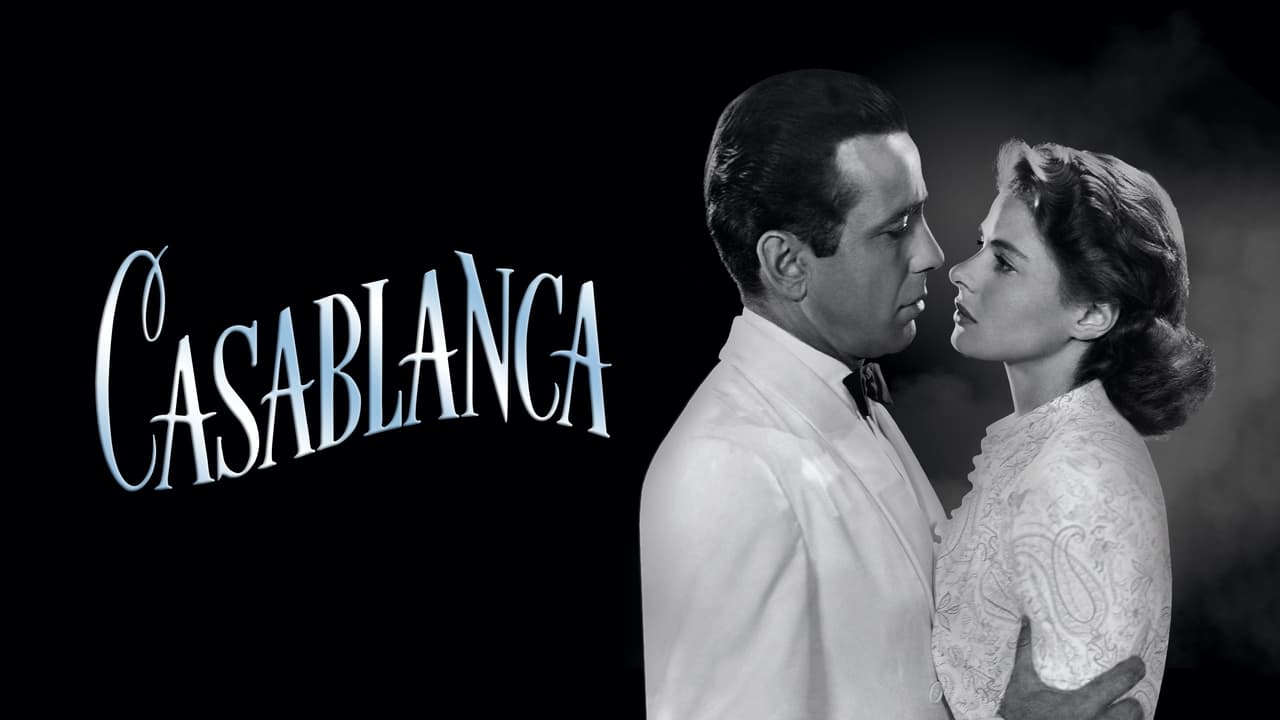
Because Ingrid Bergman was two inches taller than Humphrey Bogart, director Michael Curtiz reportedly had Bogart stand on blocks or sit on cushions during their scenes together.
The Motion Picture Production Code forced changes to the script, including softening implications that Captain Renault extorted sexual favors from refugees and that Rick and Ilsa had previously slept together.
The final airport scene's background was created using little-person extras and a proportionate cardboard cutout plane, with fog used to hide the model's unconvincing appearance.
A scene showing Rick, Renault, and Free French soldiers on a ship to tie into the real-life Allied invasion of North Africa was planned but abandoned after David O. Selznick judged it would be a mistake to change the ending, partly because it proved too difficult to get Claude Rains for the shoot.
Composer Max Steiner wanted to replace the song 'As Time Goes By' with his own composition, but Ingrid Bergman had already cut her hair short for her next film role and could not reshoot the scenes featuring the song, so Steiner built the score around it and 'La Marseillaise' instead.
The Nazi anthem 'Horst-Wessel-Lied' was originally intended for the 'duel of the anthems' scene but was still under international copyright in non-Allied countries, so 'Die Wacht am Rhein' was used instead.
Dooley Wilson, who played piano-playing Sam, was actually a drummer and not a pianist; his piano playing in the film was performed by Jean Plummer.
Bogart's famous line 'Here's looking at you, kid,' spoken four times in the film, was not in any draft screenplay but is attributed to a remark Bogart made to Bergman while she played poker with her English coach and hairdresser between takes.
The famous closing line 'Louis, I think this is the beginning of a beautiful friendship' was chosen by producer Hal Wallis two weeks after shooting ended, and Bogart was recalled a month after filming wrapped to dub the line.
In 1982, writer Chuck Ross retyped the Casablanca screenplay under its original title and submitted it to 217 talent agencies; only 33 recognized it as Casablanca, while 41 rejected it outright with comments criticizing its weak story and excessive dialogue.
Warner Bros. released a heavily edited West German version in 1952 that removed all Nazi references and altered the plot so that Victor Laszlo became a Norwegian atomic physicist pursued by Interpol rather than a concentration camp escapee; a version restoring the original plot wasn't released in Germany until 1975.




Torrezno ★ 10
1 week ago
Tú y yo. Casablanca. Piénsalo