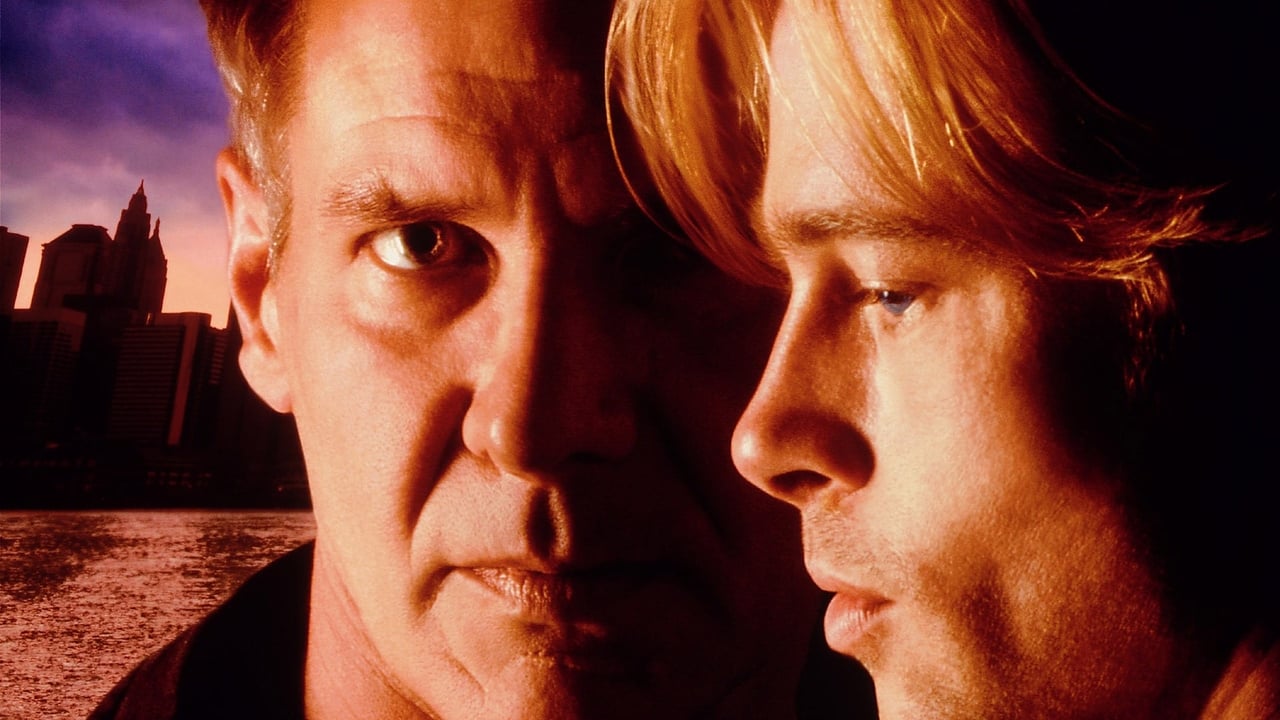
The project originated in the early 1980s as a pitch by producers Lawrence Gordon and Robert F. Colesberry, with screenwriter Kevin Jarre writing the first draft after disappearing for a couple of years to craft it.
Lawrence Gordon brought the script to Brad Pitt in 1991 after seeing him in Thelma and Louise and A River Runs Through It, intending it as a gritty, low-budget thriller with Pitt as the sole star, but the project stalled at Universal Pictures due to Pitt's lack of acting credits and the controversial subject matter.
Renewed interest thanks to Pitt's success in Se7en, Legends of the Fall, Interview with the Vampire, and 12 Monkeys eventually led the project from Universal's turnaround to Columbia Pictures, where Gordon and Pitt convinced studio chief Mark Canton to fund it with an estimated $30 million budget.
Gene Hackman and Sean Connery were both considered at various points for the role of Tom O'Meara before Harrison Ford was approached at Brad Pitt's suggestion.
Because the studio doubted Pitt could carry the film alone, screenwriters David Aaron Cohen and Vincent Patrick were brought in to expand Ford's originally supporting role into a full co-lead, transforming the story into a two-hero piece.
Directors James Gray, Bryan Singer, and Milcho Manchevski all turned down the project before Pitt and Ford suggested Alan J. Pakula, who initially declined three times before accepting for a $5 million fee.
While preparing for his role in Belfast, Brad Pitt was attacked and suffered bruises on Falls Road after being mistakenly identified as a Protestant.
Harrison Ford researched his role by joining NYPD officers on nearly a dozen routine patrols, including in the Washington Heights section, to understand a patrolman's daily life.
Principal photography began on February 5, 1996 with the script still unfinished, leading to reported ego clashes, budget overruns, and long delays; Pitt reportedly threatened to quit and later publicly denounced the film as 'the most irresponsible bit of film making' he had ever seen.
Screenwriter Terry George was hired just one week before shooting began specifically to help deepen Pitt's character Frankie McGuire and address his concerns about a superficial portrayal of the IRA conflict.
Screenwriter Robert Mark Kamen was brought on during production to rewrite scenes on the fly, meeting separately with Ford and Pitt to incorporate their differing ideas before writing new material with Pakula.
For security reasons, the Northern Ireland scenes were actually filmed in the Republic of Ireland, with the opening scenes shot at Port Oriel in Clogherhead, County Louth, and the Belfast shootout filmed in Inchicore, Dublin in July 1996.
Two months before release, Pakula was unhappy with the boat showdown finale and called cast and crew back to rewrite and reshoot it over two days at a California studio.
This was the final film directed by Alan J. Pakula, who died the year after its release, and also the final film photographed by cinematographer Gordon Willis, who retired soon afterward.
Director Alan J. Pakula compared his intent for the Ford-Pitt relationship to the 1948 western Red River, in which John Wayne's character is defied by his young protégé played by Montgomery Clift.
The film grossed $43 million in North America but performed much better overseas with $98 million, bringing its worldwide total to $140 million against an estimated $30 million budget.
Brad Pitt's Belfast accent was widely criticized by reviewers, and in 2024 Irish Central listed his performance among 'The Worst Irish Accents in Hollywood Movies'.
Two months before her death, Princess Diana took her sons Prince William (15) and Prince Harry (12) to see the film despite its 15-rating, persuading the cinema to let the underage Harry attend, which sparked controversy over both the law-flouting and the film's IRA-related subject matter given that Earl Mountbatten, her sons' great-uncle, had been assassinated by the IRA.