
No connection

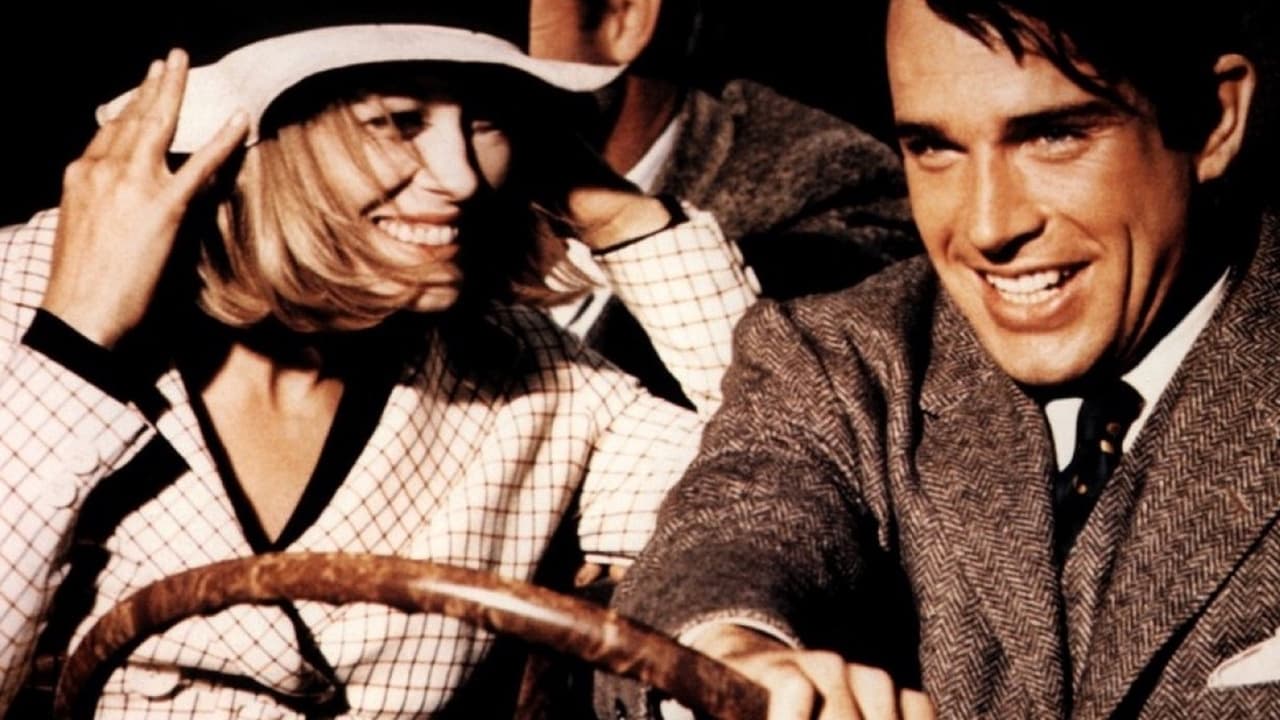
Bonnie and Clyde

They’re young… they’re in love… and they kill people.

1967 · 111 min · Crime
7.4 Modest
Crime Drama

In the 1930s, bored European-American waitress Bonnie Parker falls in love with a European-American ex-con named Clyde Barrow and together they start a violent crime spree through the country, stealing cars and robbing banks.

Country of origin
🇺🇸 United States
Year
1967

Trivia & behind the scenes

/
Origins

The script was first offered to François Truffaut, who contributed ideas but passed to direct Fahrenheit 451 instead, and at his suggestion the writers approached Jean-Luc Godard.

Origins

Godard reportedly wanted to shoot the film in New Jersey in January to represent Texas, and when producers objected on climate grounds he retorted, 'I'm talking cinema and you're talking weather. Goodbye.' After the 1968 Oscars he sent the writers a cable reading, 'Now, let's make it all over again!'

Origins

Warren Beatty learned of the project from Truffaut while visiting Paris, then returned to Hollywood, bought the script rights, and produced the film himself.

Casting

Before directing, Arthur Penn turned down the job several times, while George Stevens, William Wyler, Karel Reisz, John Schlesinger, Brian G. Hutton, and Sydney Pollack all declined to direct.

Casting

Shirley MacLaine, Beatty's sister, was a strong contender to play Bonnie before Beatty decided to play Clyde himself; other actresses considered included Jane Fonda, Tuesday Weld, Ann-Margret, Sharon Tate, and Cher, who auditioned, while Beatty personally begged Natalie Wood, who declined.

Casting

Gene Wilder made his film debut in Bonnie and Clyde playing hostage Eugene Grizzard.

Filming

For the family gathering scene filmed in Red Oak, Texas, local schoolteacher Mabel Cavitt was spotted among the crowd of onlookers and cast on the spot to play Bonnie Parker's mother.

Origins

The screenwriters originally wrote Clyde as bisexual, envisioning a three-way relationship between Bonnie, Clyde and their getaway driver, but Arthur Penn convinced them to cut this to preserve audience sympathy for the couple.

Effects

Bonnie and Clyde was one of the first mainstream American films to make extensive use of squibs—small explosive charges filled with fake blood hidden under actors' clothes—to simulate realistic bullet hits, most notably in its famously graphic death scene.

Filming

Beatty wanted to shoot the film in black and white, but Warner Bros. rejected the idea; studio head Jack L. Warner was hostile to the project and complained about the costs of extensive location shooting in Texas, ordering the crew back to the studio backlot.

Music

The banjo instrumental 'Foggy Mountain Breakdown' by Flatt and Scruggs became a worldwide hit thanks to its frequent use in the film, despite bluegrass music being anachronistic for the 1930s setting.

Reception

Frank Hamer's widow and son sued the filmmakers for defamation over his portrayal as a bungling, humiliated lawman, reaching an out-of-court settlement in 1971.

Reception

Newsweek critic Joe Morgenstern initially panned the film but, after watching it again and observing an enthusiastic audience, published a second article reversing his opinion; Warner Bros. used this reversal in its marketing.

Reception

New York Times critic Bosley Crowther's harshly negative review, seen as out of step with public opinion, contributed to his being fired from the paper, while Pauline Kael's admiring New Yorker essay led to her being hired there as staff critic.

References

A still image of Beatty as Clyde firing a Thompson submachine gun appears briefly in the 'Storage Jars' skit of Monty Python's Flying Circus.

Memorable quotes

/

We rob banks!

Bonnie Parker Introducing themselves and their criminal enterprise.

This here's Miss Bonnie Parker. I'm Clyde Barrow. We rob banks.

Clyde Barrow Formally introducing himself and Bonnie to someone.

[Clyde has just shot the hat off a bank guard's head] Next time I'll aim a little lower!

Clyde Barrow After shooting a hat off a bank guard's head during a robbery.

Hell, you might just be the best damn girl in Texas.

Clyde Barrow Complimenting Bonnie.

[to Bonnie, on her poem] You know what you done there? You told my story, you told my whole story right there, right there. One time, I told you I was gonna make you somebody. That's what you done for me. You made me somebody they're gonna remember.

Clyde Barrow Responding to Bonnie's poem about him.

[to Clyde] You're just like your brother. Ignorant, uneducated hillbilly, except the only special thing about you is your peculiar ideas about love-making, which is no love-making at all.

Bonnie Parker Criticizing Clyde's approach to their relationship.

Farmer: All I can say is, they did right by me — and I'm bringin' me and a mess of flowers to their funeral.

Farmer At the end, reflecting on his encounters with the gang.

What people are saying (1)

Log in to share your take.

P

Paink42

1 week ago

Review ★ 7

Film plus intéressant pour le mouvement de cinéma qu'il a contribué à lancer avec le nouvel Hollywood que pour le film en lui même. Il raconte cependant une très belle histoire d'amour et de gangster en ayant une caractérisation des personnages, notamment féminins, très différents des normes de l'époques. La scène finale est aussi une grande prise de risque pour l'époque en terme de ce qui pouvait se montrer à l'écran ou non.

Read the review


New version available

A Seenr update was just released. Reload to get it.