No connection

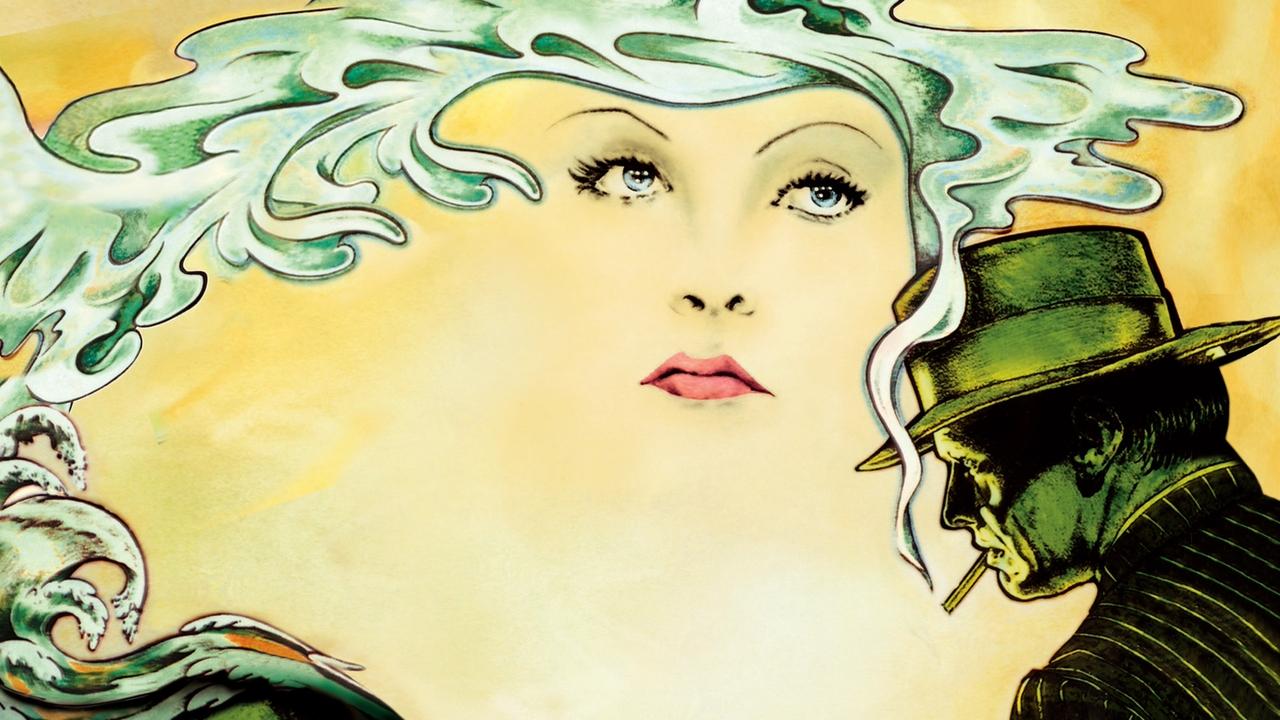
Chinatown

You get tough. You get tender. You get close to each other. Maybe you even get close to the truth.

1974 · 130 min · Crime
7.7 Modest
Crime Mystery Thriller

Private eye Jake Gittes lives off of the murky moral climate of sunbaked, pre-World War II Southern California. Hired by a beautiful socialite to investigate her husband's extra-marital affair, Gittes is swept into a maelstrom of double dealings and deadly deceits, uncovering a web of personal and political scandals that come crashing together.

Country of origin
🇺🇸 United States
Year
1974

Trivia & behind the scenes

/
Origins

Producer Robert Evans initially offered Robert Towne $175,000 to write a screenplay for The Great Gatsby, but Towne turned it down and instead asked for $25,000 to write his own original story, Chinatown.

Origins

Chinatown was conceived as the first part of a planned trilogy by Towne about detective J.J. Gittes and the exploitation of natural resources in Los Angeles; the second film, The Two Jakes, was made in 1990, but its failure canceled a planned third film about land speculation.

Origins

Towne took the film's title and its closing exchange about Chinatown from a story told by a Hungarian vice cop who had worked in LA's Chinatown, who believed police were better off doing nothing there since you could never tell what was really going on.

Origins

The screenplay was inspired by Carey McWilliams's book Southern California Country and a West magazine article called 'Raymond Chandler's L.A.'; Towne wrote to McWilliams that his book had changed his life and inspired him to write about the place where he was born.

Origins

According to Sam Wasson's book The Big Goodbye, Towne secretly employed an uncredited writing partner, an old college friend named Edward Taylor, for more than 40 years, including on Chinatown.

Casting

Towne wrote the screenplay with Jack Nicholson specifically in mind for the role of J.J. Gittes, whose name was inspired by Nicholson's real-life friend, producer Harry Gittes.

Casting

Jane Fonda was strongly considered for the role of Evelyn Mulwray, but director Roman Polanski insisted on casting Faye Dunaway instead.

Casting

Roman Polanski himself appears in a cameo as the gangster who slashes Gittes' nose; the effect used a special knife that could have actually cut Jack Nicholson's nose had Polanski not held it correctly.

Casting

In 1974, while Nicholson was filming The Fortune, Time magazine researchers informed him that the woman he believed was his sister was actually his mother, an eerie real-life parallel to the film's revelation about Evelyn and Katherine.

Filming

Polanski went through several cinematographers before settling on John A. Alonzo partway into production; because Polanski's English was poor, the two communicated in Italian, which Alonzo then translated for the crew.

Filming

Producer Robert Evans blocked William A. Fraker from being cinematographer, despite Polanski's initial choice, fearing that reuniting Polanski with his Rosemary's Baby cinematographer would give the duo too much creative control.

Filming

Following a technique Polanski attributed to Raymond Chandler, the entire film is shown subjectively through Gittes' perspective, with the character appearing in every scene; when Gittes is knocked unconscious, the film fades to black and back, mirroring his own experience.

Origins

Towne wanted Noah Cross to die and Evelyn Mulwray to survive in his original ending, but Polanski insisted on a bleaker, tragic conclusion in which Evelyn dies; the two argued over this and Polanski wrote the final scene just days before it was shot.

Music

Jerry Goldsmith composed and recorded the film's now-celebrated score in just ten days after producer Robert Evans rejected Phillip Lambro's original score at the last minute.

Music

Trumpet player Uan Rasey, MGM's first trumpet, recalled that Goldsmith instructed him to play the score's haunting solos 'sexy — but like it's not good sex.'

References

The character Hollis Mulwray was loosely inspired by real-life Los Angeles water engineer William Mulholland, and the film's plot draws on real historical events including the St. Francis Dam disaster of 1928 and an artificial water shortage caused by faulty valves in 1903–1904.

Memorable quotes

/

Lawrence Walsh: Forget it, Jake. It's Chinatown.

Lawrence Walsh After witnessing the tragic consequences of uncovering corruption in Los Angeles.

Morty: In the middle of a drought and the water commissioner drowns! Only in L.A.

Morty Commenting on the ironic death of the water commissioner during a drought.

[To Lt. Lou Escobar] You're dumber than you think I think you are.

Jake Gittes Insulting Lt. Lou Escobar.

Listen, pal. I make an honest living. People only come to me when they're in a desperate situation. I help 'em out. I don't kick families out of their houses like you bums down at the bank do.

Jake Gittes Defending his profession as a private investigator.

How the community felt

😵 Shocked 100%

What people are saying (0)

Log in to share your take.

No reviews yet.

Nothing yet. Start the conversation!

New version available

A Seenr update was just released. Reload to get it.