
Serial Experiments Lain

Close the world. txen eht nepO.

Anime 1998 · 1 season · Drama
8.2 Modest

Series finished

Log in to follow
Animation Drama Sci-Fi & Fantasy Mystery Denpa Philosophy Augmented Reality Female Protagonist Artificial Intelligence Cyberpunk

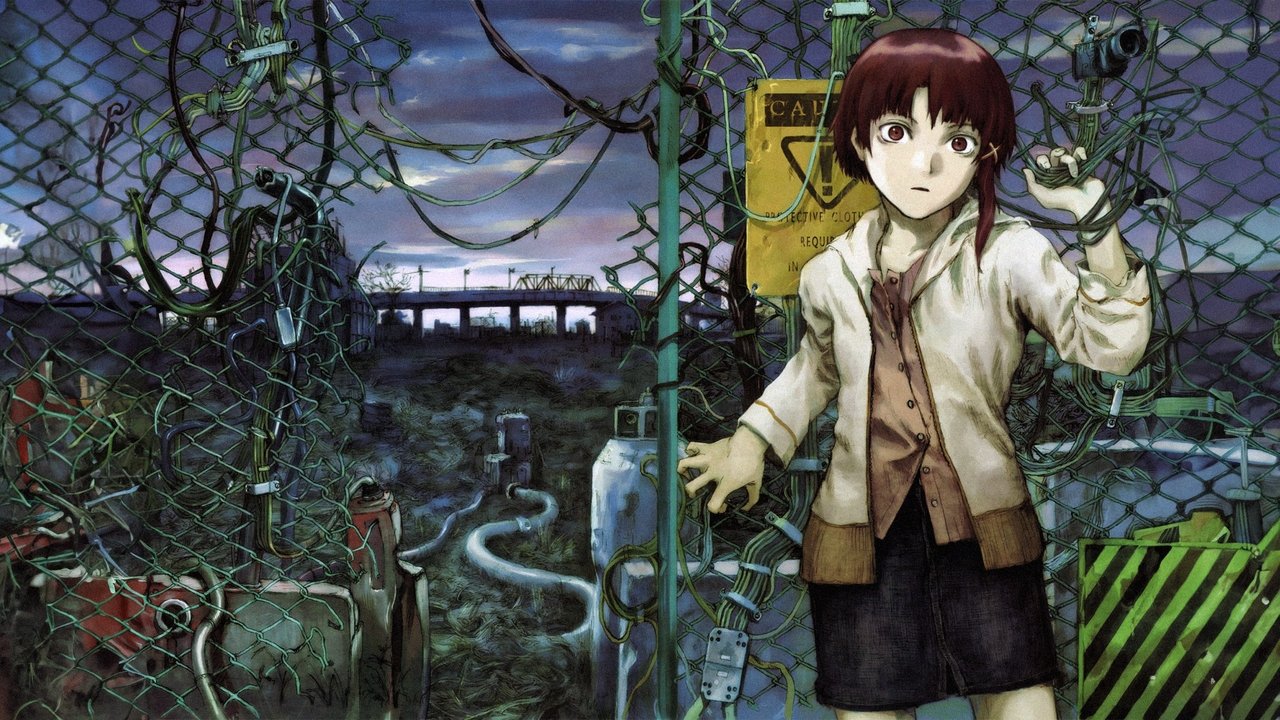
Lain—driven by the abrupt suicide of a classmate—logs on to the Wired and promptly loses herself in a twisted mass of hallucinations, memories, and interconnected-psyches.

Country of origin
🇯🇵 Japan
Year
1998
Studio
Triangle Staff
Channel
TV Tokyo

Trivia & behind the scenes

/
Origins

The Lain multimedia franchise was designed from the start to span anime, video game and manga simultaneously, with the video game's scenario actually written first even though the anime was released first.

Origins

Producer Yasuyuki Ueda described creating Lain partly as 'a sort of cultural war against American culture', hoping Japanese and American audiences would interpret the show differently; he was disappointed to find American viewers largely shared the Japanese interpretation.

Origins

The English spelling of the heroine's name was undecided for a long time, with both 'lain' and 'rain' tested in sketches by character designer Yoshitoshi Abe before 'lain' was finally chosen around March 1997.

Casting

Character designer Yoshitoshi Abe filled 11 sketchbooks of 100 pages each while developing Lain's look together with producer Ueda and writer Konaka, deliberately avoiding designs that could be reduced to a simple line or symbol.

Casting

Lain's asymmetrical left forelock was specifically requested by producer Ueda to reflect her unstable, disconcerting nature and was designed as a mystical symbol meant to block voices and spirits from being heard by her left ear.

Casting

Lain's bear pajamas were requested by character animation director Takahiro Kishida; writer Chiaki Konaka initially opposed the idea, but director Nakamura convinced him it could work as a symbolic shield for Lain's confrontations with her family.

Filming

The series was made during a transitional period for TV anime digital production: digital cut scenes were created on consumer-grade PCs and Macs (rather than expensive SGI workstations) and stored on 2GB (later 4GB) hard drives, then composited with telecine-transferred cel film footage.

Filming

For the 2010 Blu-ray restoration, the original 1998 standard-definition material stored on Betacam had to be manually restored to high definition, a very difficult process since some source material had already been discarded or was in poor condition.

References

The series is filled with Apple computer references because most of the creative staff were Mac enthusiasts: each episode's title is announced using Apple's PlainTalk speech synthesizer voice 'Whisper', and the NAVI computers run a fictional 'Copland OS Enterprise' referencing Apple's actual cancelled OS project.

References

An iMac and the 'Think Different' advertising slogan appear briefly during a montage as an unsolicited addition by the graphics team, who were also Mac enthusiasts; the video game's tagline 'Close the world, Open the nExt' references NeXT, the company later bought by Apple.

References

Writer Chiaki J. Konaka denied any influence from Neon Genesis Evangelion, stating he had not even watched it until after finishing the fourth episode of Lain; his stated influences instead include Godard, The Exorcist, and Dan Curtis's House of Dark Shadows.

References

The characters Alice, Julie and Reika were carried over by Konaka from his earlier work Alice in Cyberland, itself inspired by Alice in Wonderland; Konaka said he was surprised how closely Alice's character ended up resembling the original Wonderland character as the series developed.

Music

The opening theme 'Duvet' was performed by Bôa with lyrics by Jasmine Rodgers, while the ending theme 'Tooi Sakebi' was composed and performed by Rei 'Chabo' Yasuda.

Reception

The anime won the Excellence Prize in the Animation Division at the 2nd Japan Media Arts Festival in 1998 for its philosophical questioning of contemporary life.

Reception

Unlike the anime, the PlayStation game received little attention at launch and was criticized for its lack of gameplay, awkward interface, and long loading times, though its CG graphics and background art were praised; a fan English translation was completed and released as a PDF in 2014, and an unofficial WebGL browser port called 'lainTSX' appeared in 2021, sparking renewed interest in the game.

What people are saying (0)

Log in to share your take.

No reviews yet.

Nothing yet. Start the conversation!

New version available

A Seenr update was just released. Reload to get it.