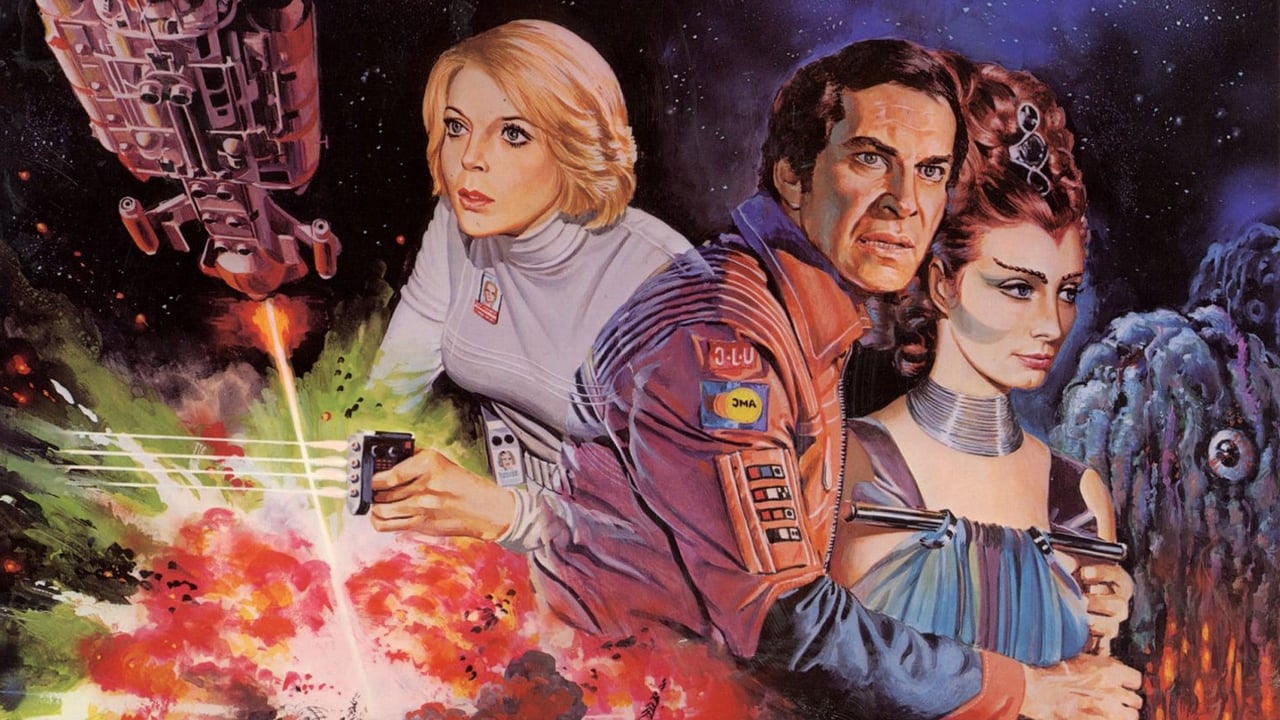

Space: 1999

The Future Is Fantastic!

1975 · 2 seasons · Sci-Fi & Fantasy
7.1 Popular

Series finished

Log in to follow
Sci-Fi & Fantasy

The crew of Moonbase Alpha must struggle to survive when a massive explosion throws the Moon from orbit into deep space.

Country of origin
🇬🇧 United Kingdom
Year
1975
Created by
Sylvia Anderson, Gerry Anderson
Channel
ITV1

Trivia & behind the scenes

/
Origins

Space: 1999 originated from a planned second series of the Anderson's UFO, tentatively titled UFO: 1999, which would have expanded the SHADO Moonbase setting; when that project stalled, the visual design and pre-production work were repurposed into the new series.

Origins

When ITC executive Abe Mandell rejected an Earth-based setting, Gerry Anderson suggested he would 'blow up the Earth,' and when Mandell objected to that too, Anderson proposed 'blow up the Moon' instead, which became the show's core premise.

Casting

Lew Grade insisted on American leads to help sell the series to a US network, so Martin Landau and Barbara Bain (a real-life married couple previously in Mission: Impossible) were cast over producer Sylvia Anderson's objections, as she had wanted British actors like Robert Culp and Katharine Ross.

Casting

Catherine Schell, who played the regular alien character Maya in the second series, had earlier guest-starred as a completely different character in the first series episode 'Guardian of Piri'.

Casting

Barry Morse's character Professor Bergman was written out for the second series due to a salary dispute, though Morse later said he was glad to leave, telling Anderson he'd rather 'play with grown-ups for a while.'

Filming

During production of the pilot episode 'Breakaway', the production secretly relocated overnight from the financially troubled Elstree Studios to Pinewood Studios, which resulted in the production being blacklisted by a union.

Filming

Britain's mandatory three-day work week and national power cuts during the 1970s energy crisis did not halt filming since Pinewood had its own generators, but the disruptions still delayed off-site film processing labs.

Filming

To meet a tight ten-month schedule for the second series, producer Fred Freiberger used a 'double-up script' system where two production units filmed two episodes simultaneously, with Landau and Bain each taking the lead in one episode and a minor role in the other.

Effects

Rather than using expensive blue-screen compositing like Star Trek, effects director Brian Johnson's team filmed spacecraft and planets against black backgrounds with the camera rewound for each element, keeping everything on the original negative as long as the elements did not overlap.

Music

The first series' score was primarily composed by longtime Anderson collaborator Barry Gray in what were his final compositions for an Anderson production, while a one-off sitar piece for 'The Troubled Spirit' was performed by Big Jim Sullivan.

References

For the second series, Helena Russell's stethoscope was replaced with a beeping all-purpose medical scanner deliberately similar to Dr. McCoy's tricorder from Star Trek.

Reception

Isaac Asimov publicly criticized the scientific accuracy of the series' premise, arguing that no explosion could be powerful enough to blast the Moon out of Earth's orbit without destroying it.

What people are saying (0)

Log in to share your take.

No reviews yet.

Nothing yet. Start the conversation!

New version available

A Seenr update was just released. Reload to get it.