Science Ninja Team Gatchaman

Anime 1972 · 3 seasons · Action & Adventure
8.5 Modest

Series finished

Log in to follow
Animation Action & Adventure Sci-Fi & Fantasy Superhero Tokusatsu

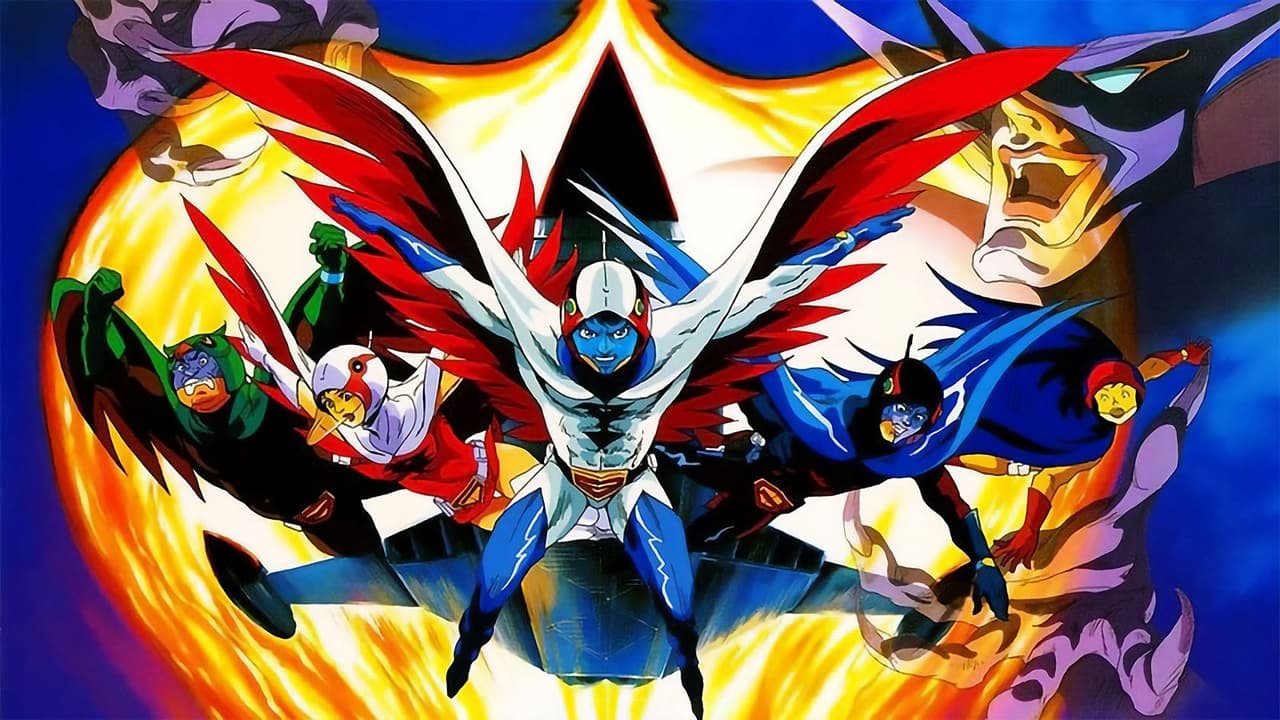
Science Ninja Team Gatchaman is a five-member superhero team that is composed of the main characters in several anime created by Tatsuo Yoshida and originally produced in Japan by Tatsunoko Productions and later adapted into several English-language versions. It is also known by the abbreviated name Gatchaman. The original series, produced in 1972, was eponymously named Kagaku Ninja Tai Gatchaman and is most well known to the English-speaking world as the adaptation titled Battle of the Planets. The series received additional English adaptations with G-Force: Guardians of Space and ADV Films' uncut 2005 release. Tatsunoko also uses the official translation Science Commando Gatchaman, as shown in numerous related products and media. Because the English-language versions are notoriously inconsistent not only with one another but also with the original Japanese series, viewers most familiar with the English versions often experience some confusion upon re-examining the series after a long hiatus. The original 1972 Kagaku Ninja Tai Gatchaman series was followed by an animated film, two sequel series, Gatchaman II, and Gatchaman Fighter. In the 90's, episodes from both series were dubbed into English by Saban as Eagle Riders. In 1994, the original series was remade as a condensed OVA series.

Original title
科学忍者隊ガッチャマン
Country of origin
🇯🇵 Japan
Year
1972
Studio
Tatsunoko Production
Created by
吉田竜夫
Channel
Fuji TV

Trivia & behind the scenes

/
Origins

The project was developed by Jinzô Toriumi and Satoshi Suyama from Tatsunoko's planning department. Producer Ippei Kuri drew inspiration from Tatsuo Yoshida's manga 'Ninja Butai Gekkô' and 'Sekai Shônen-tai', replacing the World War II historical setting with a team of 'scientific ninjas' deemed to have greater dream-appeal.

Origins

The provisional titles considered were 'Kagaku Ninja-tai Birdman' and 'Kagaku Ninja-tai Shadow Knights'. The final title 'Gatchaman' was proposed by an executive at advertising agency Yomiuri, inspired by the onomatopoeia 'gatchan' evoking the assembly of mechas, an idea initially poorly received by the Tatsunoko team who found it too comedic.

References

The name of the enemy organization 'Galactor' is taken from a character created by science fiction writer Tadashi Hirose for a previous Tatsunoko series, 'Uchū Ace'. The name of the villain Berg Katze ('mountain-cat' in German) was deliberately chosen to be inelegant in order to make an impression.

Filming

Tatsunoko had real-life cameras at the time, used for optical compositing: the Earth globe in the opening credits was made by covering a kitchen bowl with papier-mâché painted to depict seas and clouds, an idea of cameraman Masashi Hosono realized by designer Mitsuki Nakamura.

Filming

Despite its format as a weekly television series, each episode contained on average 5,000 to 6,000 cels, some even exceeding 10,000, an exceptional figure for the time. The first episode, deemed particularly successful and comparable to a kaiju film, even became the subject of a remake attempted in a later OVA.

Filming

Part of the production was outsourced to South Korea, including film development, which was early for a Japanese animated series. The episodes in question sometimes showed stains or bubbles due to the developing chemical, and differences in electrical voltage between the two countries made the image darker in Japan, requiring adjustments when printing copies.

Casting

Actor Tōru Ōhira, then known mainly for comedic roles such as in 'Hakushon Daimaō', was cast against type to play the serious Dr. Nambu, a gamble that proved successful with audiences.

Casting

The character of Berg Katze was not precisely defined at the start; it was the particular acting style of Mikio Terashima, who voiced him, that influenced the creative team to gradually develop his personality on screen.

Reception

The series was so successful that its broadcast, initially planned for one year, was extended to two years, totaling 105 episodes, with an average audience of around 21% and a peak of 26.5% for episode 53.

Trivia

Screenwriter Jinzô Toriumi later regretted what he considered to be the rushed and implausible nature of certain plot elements, which motivated him to write the novel 'Shōsetsu Kagaku Ninja-tai Gatchaman' in 1989.

References

The names of the three characters 'Ryu the owl', 'Ken the eagle', and 'Jinpei the swallow' are said to derive from the first names of the Yoshida brothers, founders of Tatsunoko Production: Tatsuo Yoshida, Kenji Yoshida, and Ippei Kuri (whose real name was Toyoji Yoshida).

References

In the Japanese film 'Kamome Shokudō', a character tries to recall the lyrics of the Gatchaman opening, a scene that pays homage to the song's fame in Japan.

Trivia

The 1978 theatrical version, a remount of the television series with a few original scenes, was credited to director Kihachi Okamoto for commercial reasons; original director Hisayuki Toriumi, a great fan of Okamoto, accepted this condition simply for the opportunity to meet him. The music was composed by Kentarō Haneda... actually by Kōichi Sugiyama and performed by the NHK Symphony Orchestra, a first for a film score in Japan.

What people are saying (0)

Log in to share your take.

No reviews yet.

Nothing yet. Start the conversation!

New version available

A Seenr update was just released. Reload to get it.