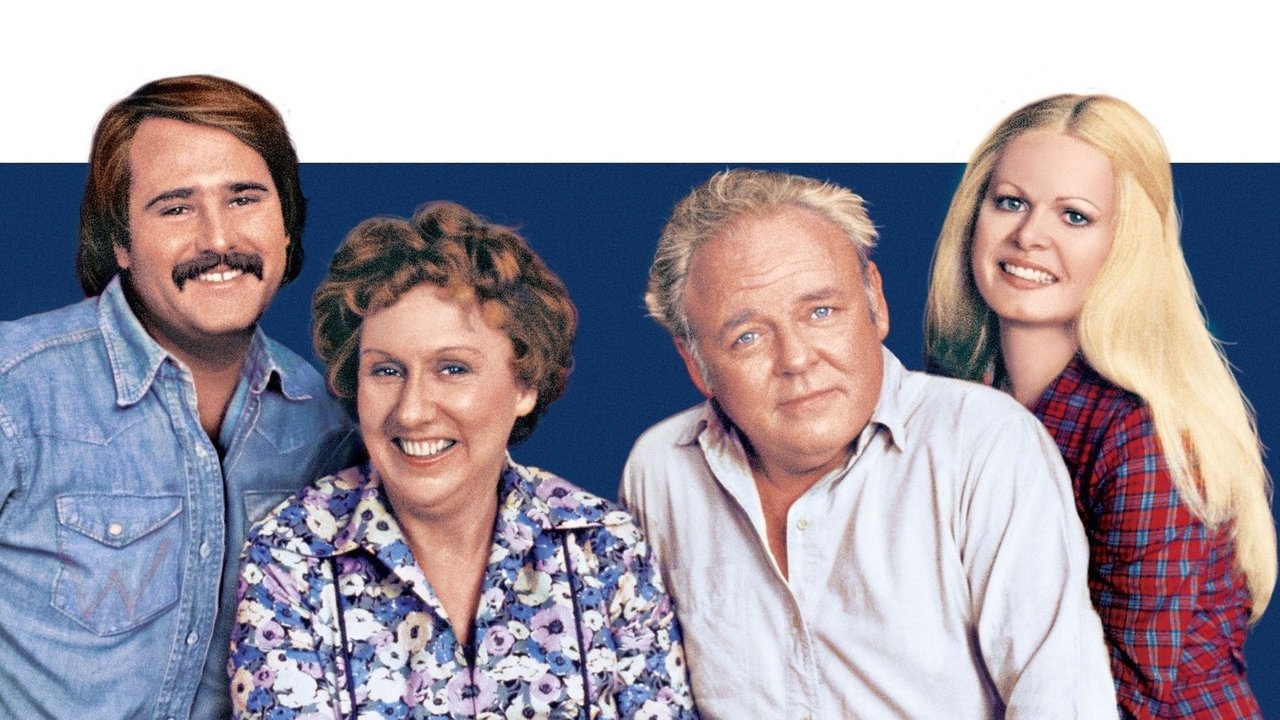
The show was based on the British sitcom Till Death Us Do Part; Norman Lear said he got the idea after reading a Variety article about the show, immediately recognizing a relationship like the one between him and his own father.
According to Sally Struthers, speaking only after Lear's death, the idea actually originated with Carroll O'Connor, who had seen Till Death Us Do Part while in the UK and pitched it to Lear, who then produced it without crediting O'Connor.
Lear incorporated real phrases from his own parents into the show, such as his father telling his mother to 'stifle herself' and his mother calling his father 'the laziest white man I ever saw.'
The original pilot, developed for ABC, was titled 'Justice for All' and featured Carroll O'Connor and Jean Stapleton as Archie and Edith Justice, taped in October 1968; a second pilot titled 'Those Were the Days' was taped in February 1969.
ABC ultimately passed on the series partly due to jitters after cancelling the sketch show Turn-On after a single episode; CBS then bought the rights and retitled the project All in the Family.
Mickey Rooney was Norman Lear's first choice to play Archie Bunker but turned down the role, feeling the character was 'un-American' and worried about controversy and poor chances of success.
Jackie Gleason and Tom Bosley were also considered for Archie Bunker, and CBS at one point wanted to buy the original British format specifically to retool it for Gleason, who was under contract to them.
Richard Dreyfuss sought the role of Michael 'Meathead' Stivic, and Harrison Ford turned it down because of Archie Bunker's bigoted character, before the part went to Rob Reiner.
The roles of Gloria and her husband (originally named Dickie) were first played by Candice Azzara and Chip Oliver; after ABC expressed dissatisfaction following the pilot, they were recast with Sally Struthers and Rob Reiner.
Penny Marshall, who married Rob Reiner shortly after the show began, was herself considered for the role of Gloria.
Sherman Hemsley was Lear's first choice for George Jefferson, but since he was performing in the Broadway musical Purlie, Lear kept the role waiting until Hemsley was free to join in 1973.
All in the Family was the first major American series videotaped in front of a live studio audience, a multi-camera taped format that became the standard for sitcoms in the 1970s.
Norman Lear took pride in the fact that canned laughter was never used on the show; all audience laughter heard was genuine.
In the final season, the production process shifted so the already-edited show was played back to a studio audience (often gathered for a taping of One Day at a Time) to record their live reactions, rather than taping in front of an audience during filming.
Although CBS insisted on shooting in color rather than black and white as Lear wanted (to mirror Till Death Us Do Part), the set was furnished in neutral, sepia-like tones to evoke the feel of an old family photo album.
The exterior house shown in the opening credits, located at 89-70 Cooper Avenue in Glendale, Queens, has no porch, unlike the Bunkers' television house, which features a front porch.
Because the opening footage was filmed in 1968, the Manhattan skyline shots never show the World Trade Center towers, which had not yet risen prominently by the time the series aired in 1971.
The theme song 'Those Were the Days' was sung live on-camera by Carroll O'Connor and Jean Stapleton at a piano in every episode, an approach Lear said was originally a cost-cutting measure due to a limited post-pilot budget.
Six different recorded versions of the opening theme were used over the series' run, with small deliberate changes, including Jean Stapleton's exaggerated sour note on the word 'were' growing into a bigger shriek over the seasons.
A longer version of 'Those Were the Days' was released as a single on Atlantic Records and reached number 43 on the Billboard Hot 100 in early 1972.
All in the Family topped the yearly Nielsen ratings from 1971 to 1976, making it the first television series to hold the number one spot for five consecutive years.
The series finale was watched by 40.2 million viewers, and the episode 'Sammy's Visit' produced the longest sustained audience laughter in the show's history after Sammy Davis Jr. kissed Archie on the cheek.
The cast forfeited their residual rights in exchange for a cash payout early in the production run.