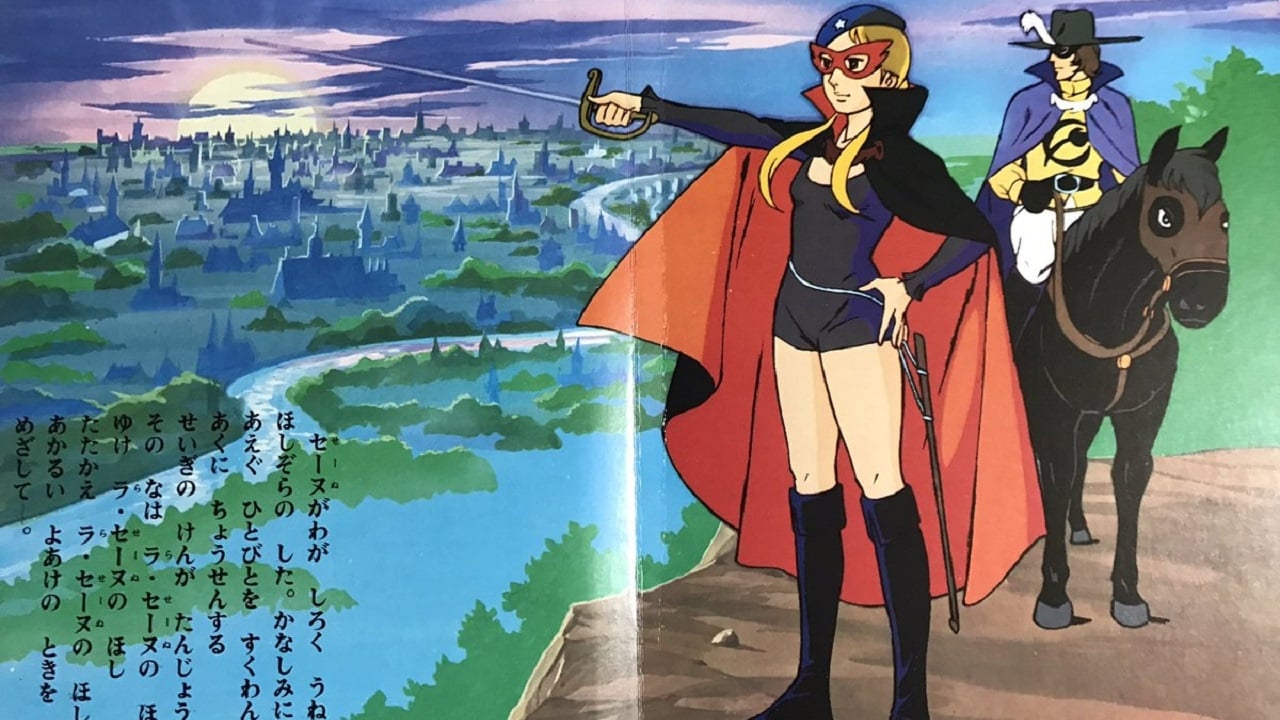
The Star of the Seine

Anime 1975 · 1 season · Action & Adventure
6.6 Modest

Series finished

Log in to follow
Action & Adventure Animation Drama Historical Swordplay Foreign Female Protagonist

La Seine no Hoshi is an anime series by Sunrise, which premiered in Japan on Fuji TV from April 4, 1975 and finished its run on December 26, 1975, spanning a total of 39 episodes. The title translates to English as "Star of the Seine" or "The Seine's Stars." It is based on Alain Delon's 1963 movie La Tulipe noire. It was created by Mitsuru Kaneko, and was directed by Masaaki Ōsumi and Yoshiyuki Tomino. It was written by Sōji Yoshikawa, while the character designer was Akio Sugino. The music for the series was composed by Shunsuke Kikuchi.

Original title
ラ・セーヌの星
Country of origin
🇯🇵 Japan
Year
1975
Studio
Sunrise
Created by
Mitsuru Kaneko
Channel
Fuji TV
Studio
SUNRISE

Trivia & behind the scenes

/
Origins

The series was originally planned as an anime adaptation of the then-popular manga The Rose of Versailles, but the project turned into an original creation instead.

Origins

The final work blended elements of The Rose of Versailles with elements from Osamu Tezuka's Princess Knight (Ribon no Kishi).

Origins

The show is credited as based on Alain Delon's 1964 film The Black Tulip, which itself only shares its title with Alexandre Dumas père's novel of the same name.

Origins

The series was the debut production of Emukei, the company founded by Mitsuru Kaneko, who is credited as the original creator.

Casting

Yoshiyuki Tomino took over as director for the final arc (episodes 27-39), while Masaaki Ōsumi, who had been chief director for the first 26 episodes, became supervising director for that stretch.

Music

For the opening theme, Nihon Columbia staffer Hidetoshi Kimura proposed hiring an actual French singer; auditions were held in Paris with the cooperation of the French Embassy in Japan and the French Government Tourist Office, and singer Arlène was chosen from among eight applicants after three days of Japanese-language coaching.

Music

Because Arlène's recording was not ready in time, singer Mitsuko Horie, who had been kept as a backup in case no suitable French singer was found, performed the opening and ending themes for episodes 1 and 2 only.

Music

A month after the broadcast began, Arlène traveled to Japan and held promotional events at six locations centered around the Kanto region.

References

The character Danton, though sharing his name with the real revolutionary Georges Danton, is explicitly a different, unrelated character in the story.

References

The final episode alludes to the real historical letter known as Marie Antoinette's last letter, written in prison to Princess Élisabeth, which still exists and is preserved today.

Trivia

On Fuji TV's original broadcast, the show was sponsored solely by the department store Isetan, whose logo appeared during part of the opening sequence.

Reception

The 2012 DVD-BOX release by Media Factory was the first time the complete series was released on home video in Japan, though it omitted the original Isetan-logo opening and the Horie-sung opening version, keeping only the Horie ending version.

What people are saying (0)

Log in to share your take.

No reviews yet.

Nothing yet. Start the conversation!

New version available

A Seenr update was just released. Reload to get it.