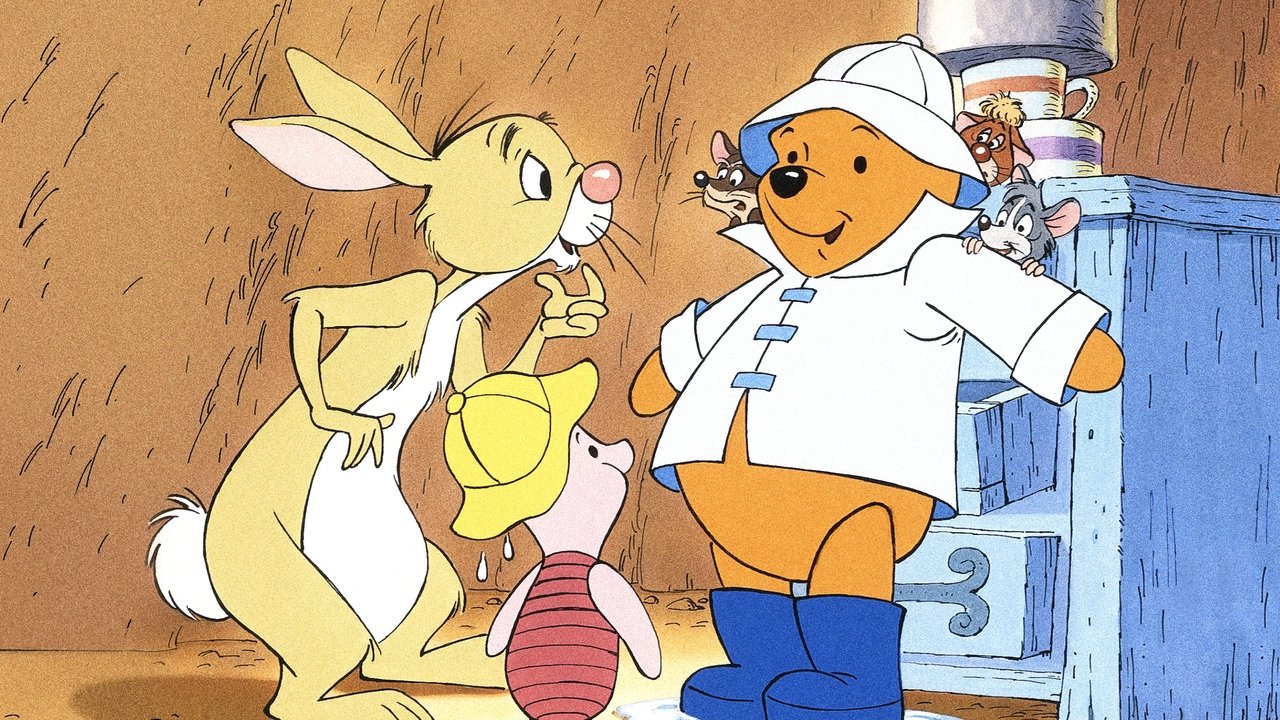

The New Adventures of Winnie the Pooh

1988 · 4 seasons · Family
7.7 Modest

Series finished

Log in to follow
Family Animation Comedy Kids

An American animated children's television series inspired by A. A. Milne's Winnie-the-Pooh stories.

Country of origin
🇺🇸 United States
Year
1988
Channel
ABC

Trivia & behind the scenes

/
Origins

A television series adaptation was first discussed as early as 1957, when NBC suggested Jay Ward develop a pilot titled The World of Winnie the Pooh, with some songs and dialogue recorded before the project was abandoned.

Origins

The series was greenlit after Disney Television Animation VP Gary Krisel proposed Pooh as a Saturday morning cartoon during a company retreat, partly because the merchandising license held by Sears could serve as a promotional tool.

Origins

Writer Mark Zaslove, fresh off finishing the DuckTales pilot, was given only three days over Memorial Day weekend 1987 to write the series bible that got the show greenlit.

Casting

Sterling Holloway, the original voice of Winnie the Pooh from the 1960s featurettes, auditioned to reprise his role, but producers felt he could not handle a full series commitment at his age, a decision that angered his agent; Jim Cummings was cast instead.

Casting

Actors Burgess Meredith and E. G. Marshall reportedly also read for the role of Pooh before Jim Cummings was cast, according to Cummings himself.

Casting

Paul Winchell recorded his lines as Tigger alone and often from Florida on his cardiologist's advice to reduce stress, while making humanitarian trips to Africa; Jim Cummings understudied for him until eventually taking over the role.

Filming

Thanks to then-advanced recording technology, cast members could record separately from each other; John Fiedler recorded his lines as Piglet from New York while other actors recorded in Burbank or Florida.

Effects

The show used an unusually high number of animation cels, about 20,000 per episode compared to the typical 8,000–12,000 for other cartoons, giving it more drawings per minute than any other TV cartoon at the time.

Reception

The show won back-to-back Daytime Emmy Awards for Outstanding Animated Program and two Humanitas Prizes, and was even cited in the Children's Television Act of 1990 as an example of a positive educational program.

References

This series marked the first time heffalumps and woozles were actually depicted on screen as characters (Heff Heffalump and Stan Woozle), whereas previously they had only been imaginary creatures representing childhood fears.

What people are saying (0)

Log in to share your take.

No reviews yet.

Nothing yet. Start the conversation!

New version available

A Seenr update was just released. Reload to get it.