
Minor technical issue

Some information may be temporarily missing. Everything should be back to normal in a few minutes.

The Man from U.N.C.L.E.

1964 · 4 seasons · Action & Adventure
7.2 Modest

Series finished

Log in to follow
Action & Adventure Comedy Sci-Fi & Fantasy

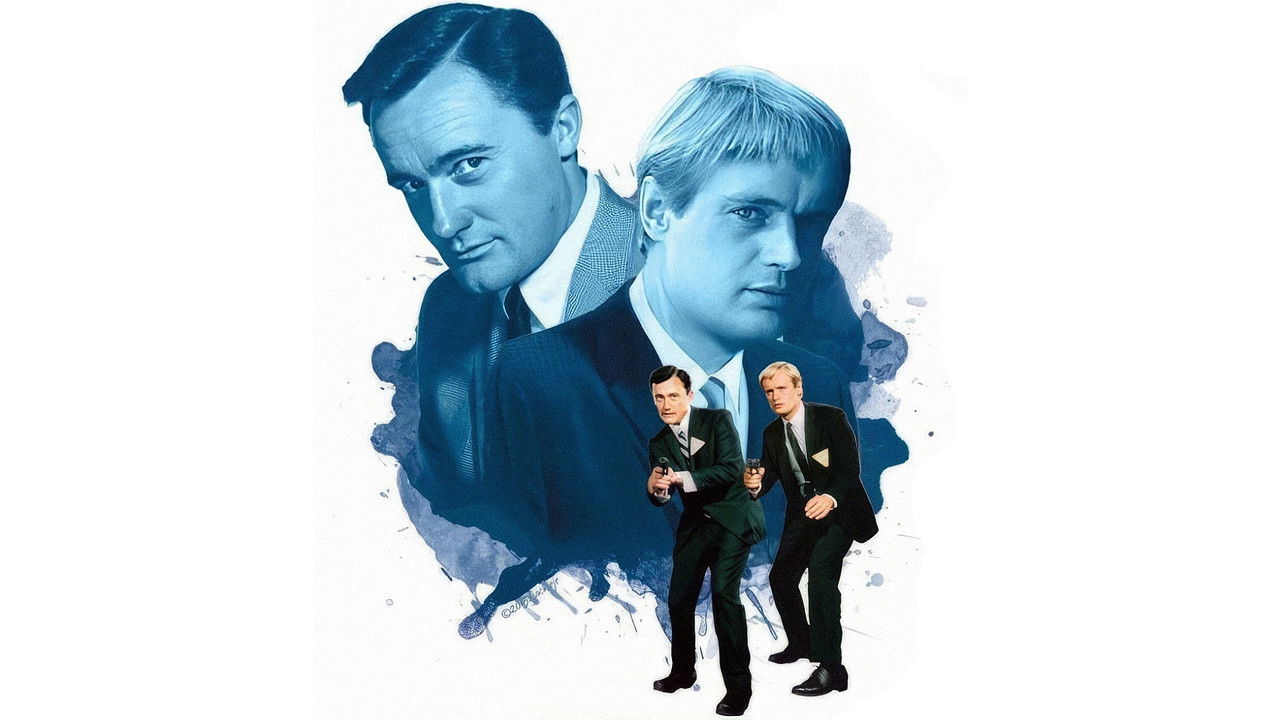
Agents Napoleon Solo and Illya Kuryakin work for a secret intelligence service working under the auspices of the U.N. Their immediate superior is Mr. Waverly. Together they operate out of a secret base beneath the streets of New York City, and accesses through several cover business such as Del Floria's Tailor Shop and the Masque Club. This secret intelligence service is called U.N.C.L.E. United Network Command for Law and Enforcement.

Country of origin
🇺🇸 United States
Year
1964
Created by
Sam Rolfe, Norman Felton
Channel
NBC

Trivia & behind the scenes

/
Origins

Sam Rolfe, co-creator of the series, originally wanted the meaning of U.N.C.L.E. to remain ambiguous so it could suggest either 'Uncle Sam' or the United Nations, but MGM's legal department worried about commercial use of 'U.N.' and forced the acronym United Network Command for Law and Enforcement.

Origins

Ian Fleming contributed to the series' creation after being approached by co-creator Norman Felton, proposing the characters Napoleon Solo and April Dancer, and the show was originally titled 'Ian Fleming's Solo'.

Origins

A law firm representing James Bond producers Harry Saltzman and Albert R. Broccoli demanded the show stop using Fleming's name and the character name 'Solo', since a minor Mafia boss called 'Mr. Solo' appeared in the Bond film Goldfinger; the dispute was settled by keeping the character name Napoleon Solo but changing the show's title.

Casting

Napoleon Solo was originally meant to be the sole focus of the series, but David McCallum's Russian agent Illya Kuryakin generated so much fan enthusiasm that the two characters became a team.

Casting

William Shatner and Leonard Nimoy appeared together in the 1964 episode 'The Project Strigas Affair', a full two years before Star Trek premiered, with Shatner as a heroic civilian recruit and Nimoy as a villain's henchman.

Filming

The pilot, filmed in color in late 1963 at a Lever Brothers soap factory in California, featured Will Kuluva as the head of U.N.C.L.E. (Mr. Allison) instead of Leo G. Carroll's later Mr. Waverly, and had to be reshot and edited down from 70 to 50 minutes and converted to black-and-white for TV broadcast as 'The Vulcan Affair'.

Filming

The producers considered several alternative names for the villain organization before settling on Thrush, including Raven, Shark, Squid, Vulture, Tarantula, Snipe, Sphinx, Dooom, and Maggot; the name WASP was used instead in the theatrical version 'To Trap a Spy' because Thrush initially sounded too similar to Fleming's SMERSH, though WASP itself had to be avoided in some markets because of the British series Stingray's W.A.S.P. organization.

Effects

The 'U.N.C.L.E. Special' prop gun, a modular pistol that could be converted into an automatic carbine, generated so much fan mail that authorities visited the set investigating reports the studio was illegally manufacturing machine guns, requiring a tour of the prop room to prove the weapons were harmless dummies.

Effects

The 'U.N.C.L.E. car' seen in later seasons was a modified Piranha Coupe built on a Chevrolet Corvair chassis; after being lost following the show's end, it was rediscovered in Colorado in the early 1980s and restored by Oscar-winning effects artist Robert Short.

Music

The series' theme, written by Jerry Goldsmith, evolved each season alongside the show's tone, with composers using dramatic brass and martial rhythms in season one, jazz flute and bongos in season two, and a campier R&B organ and saxophone version by season three; Nelson Riddle's score for 'The Concrete Overcoat Affair' was so disliked by executive producer Norman Felton that he never hired Riddle again.

Reception

The success of the series led MGM to release several episodes theatrically as B movies or double features, including 'To Trap a Spy' and 'The Spy with My Face', marketed with 'in color' prominently featured since many viewers still only had black-and-white televisions.

What people are saying (0)

Log in to share your take.

No reviews yet.

Nothing yet. Start the conversation!

New version available

A Seenr update was just released. Reload to get it.