Kamen Rider Revice

The hero and the demon are a tag team... in other words, the strongest!

2021 · 1 season · Action & Adventure
7.0 Modest

Series finished

Log in to follow
Action & Adventure Drama Kids Sci-Fi & Fantasy Mystery

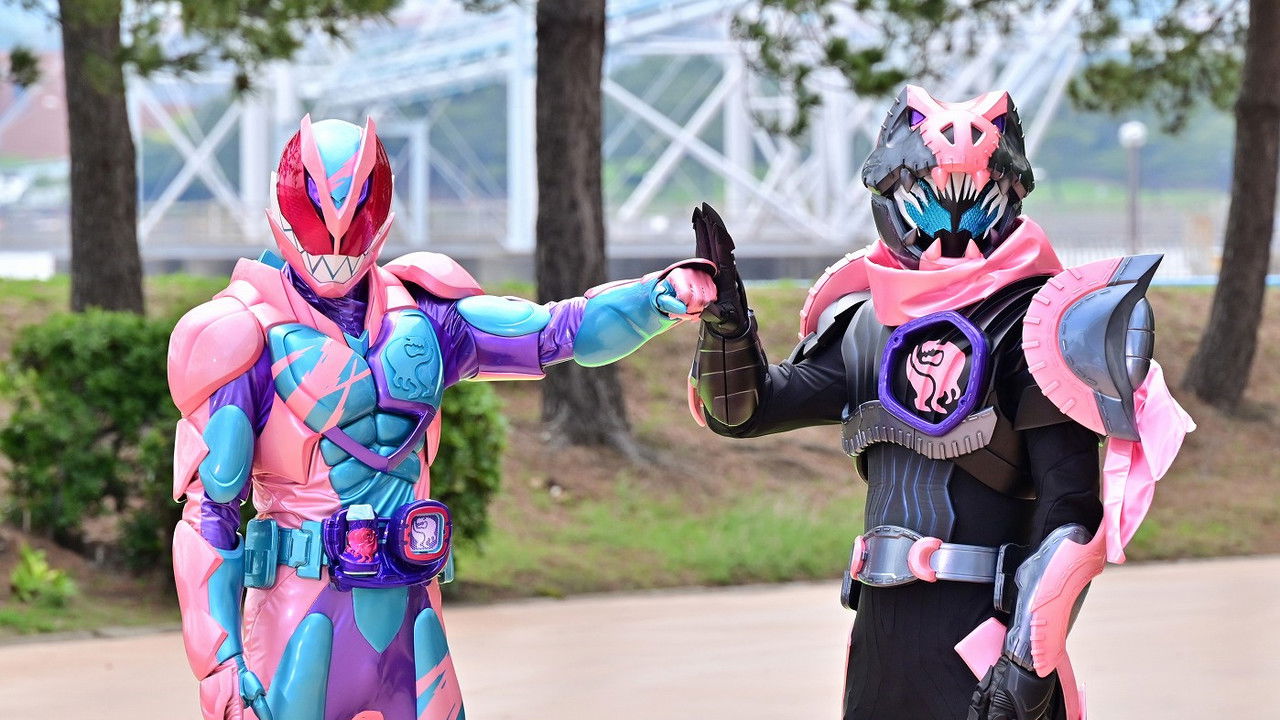
In 1971, a scientific expedition in Latin America had uncovered an ancient artifact containing the remains of the demon Giff, leading to the creation of the Vistamps. In the present day, the remains of Giff now lie in the hands of a demon cult called the Deadmans, who seek to resurrect him by converting peoples' inner demons into their fold. Fenix, a governmental organization opposing the Deadmans, have developed the Revice Driver for someone with complete control over their inner demon. Ikki Igarashi, a young man who runs a public bath with his family, comes into acquisition of the belt while forming a contract with his inner demon Vice. Together, as Kamen Rider Revi and Vice, they are Kamen Rider Revice!

Original title
仮面ライダーリバイス
Country of origin
🇯🇵 Japan
Year
2021
Channel
tv asahi

Trivia & behind the scenes

/
Origins

Kamen Rider Revice was produced as the 50th anniversary work of the Kamen Rider franchise and is the third series of the Reiwa era, featuring a hero concept of 'one person, two Kamen Riders' who transform through a contract with a demon.

Origins

The concept required titles to share a common middle word: the name 'Vice' was chosen first for its connotation of evil and buddy feeling, then 'Revice' emerged meaning 'to correct/revise evil', and finally 'Revi' was chosen for its resemblance to the biblical Leviathan and its Hebrew meaning of 'connection'.

Origins

The design avoided changing colors between forms like in Kamen Rider Zero-One, since with two separate Rider characters (Revi and Vice) a color change risked making it unclear which Rider was which, so form changes kept consistent color palettes inspired by synthwave and vaporwave pastel tones.

Origins

The protagonist's name was originally going to be 'Ichiban' (meaning 'number one') but was changed because such a word is often used in dialogue in hero shows.

Origins

Since Kamen Rider Saber, the previous series, heavily featured swords, Revice's main weapon Oein Buster was designed as an axe for close combat instead, and the team also aimed to focus more on hand-to-hand combat rather than sword-based action.

Filming

Because this was the first Kamen Rider series to start production during the COVID-19 pandemic, the social climate was reflected in Vice's mask design, which hides his monstrous fanged mouth behind a mask-like design with a friendly drawn mouth on the surface.

Filming

Vice's television series suit was remade with thinner, lighter fabric compared to the suit used in the short film, specifically as a countermeasure against heatstroke during filming.

Casting

Actor Toji role's actor Hentsugi (playing Genta Igarashi) publicly joked before the show started that he would 'quit acting' if his character got to transform, without knowing at the time that his character was secretly a former Kamen Rider whose amnesia was part of the plot.

References

The Dead Mans organization's Latin/Mexican-inspired visual design, including officer names taken from tequila brands like 'Julio' and 'Aguilera', was chosen partly as a nod to the Mexican branch and Saboteguron from the original 1971 Kamen Rider series, in honor of the 50th anniversary.

Trivia

Actress Ibujo playing Furio kept the same blunt-cut fringe hairstyle from a stage play ('Pandora no Kane') she was performing in when she auditioned for Revice, and was told during costume fitting to keep that same hairstyle for the role.

Casting

The character Aguilera was originally planned to die alongside Furio after being betrayed by their organization, but both were kept alive due to their popularity and the writers deciding that surviving and living with their past sins would itself serve as a meaningful redemption arc.

Effects

The Rabukofu suit (a small cobra-like demon) was performed by a single suit actor crouching inside a compact costume; a small garden-cart-like wheeled device was initially built into the suit to allow fast movement, but the actor's own movement on foot proved faster, so the wheels were quickly abandoned.

Filming

Due to the low viewpoint inside the Rabukofu suit, the performer could largely only see straight ahead and relied on the sound of being touched to react appropriately during stroking or petting scenes.

What people are saying (0)

Log in to share your take.

No reviews yet.

Nothing yet. Start the conversation!

New version available

A Seenr update was just released. Reload to get it.