Pretty Cure

Anime 2004 · 2 seasons · Action & Adventure
7.9 Popular

Series finished

Log in to follow
Animation Action & Adventure Comedy Kids Family Sci-Fi & Fantasy Henshin Female Protagonist Primarily Female Cast Swordplay Episodic Kids

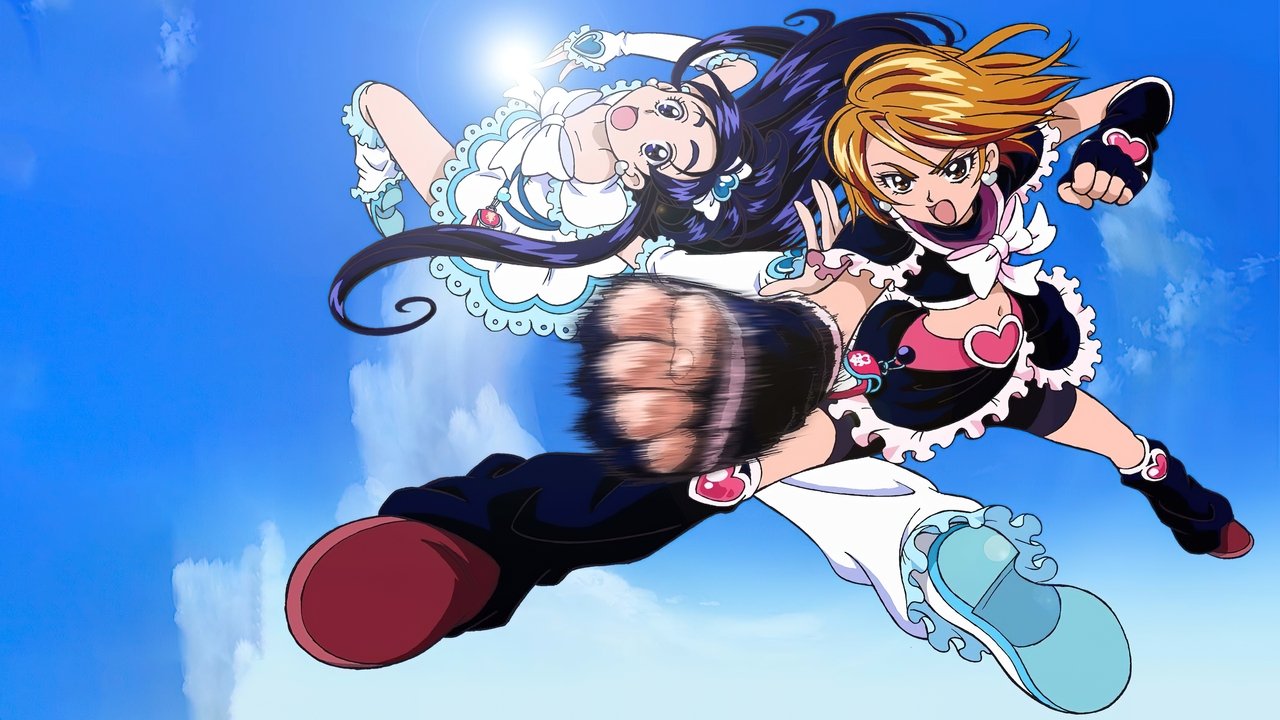
Nagisa Misumi and Honoka Yukishiro couldn't be more different. Nagisa is sporty and Honoka bookish, and while they attend the same school, they have very little in common - until one day, a shower of shooting stars brings two very unlikely visitors into their lives: Mepple and Mipple, refugees from the Garden of Light, which has been conquered by Darkness. Endowed with new and startling powers, Nagisa and Honoka become Cure Black and Cure White, the legendary warriors of light - together, they are Pretty Cure.

Original title
ふたりはプリキュア
Country of origin
🇯🇵 Japan
Year
2004
Studio
Toei Animation
Channel
HTB · tv asahi · Nagoya TV · KBC

Trivia & behind the scenes

/
Origins

The production staff was largely renewed compared to previous shows in the same Sunday morning timeslot, aiming for a distinctly different tone from existing series aimed at young girls.

Origins

Producer Ten Washio came from a journalism background with no prior experience in girls' anime, which contributed to the show's unusual, action-heavy direction.

Origins

Series director Daisuke Nishio, known for Dragon Ball and Air Master, had no experience with girls' shows either and took the job with a 'if it doesn't work, I'll just apologize and run' attitude.

Origins

The title 'Futari wa Pretty Cure' (meaning 'The two are Pretty Cure') was chosen to evoke the buddy-cop dynamic of detective dramas and to declare that no unnecessary main characters would be introduced beyond the core duo.

References

To design the buddy-hero concept, the creators referenced buddy cop works such as the film '48 Hrs.', 'Dirty Harry', the TV drama 'Uwasa no Deka Tommy to Matsu', and, for Nishio, 'CHiPs' (Shirobai Yarou John & Punch).

Casting

Character designer Akira Inagami, who had worked on Dragon Ball and contributed to the timeslot since 'Yume no Crayon Oukoku', was chosen through a competition and was asked to avoid the trendy big-eyes/no-chin look in favor of sharper, more dignified features suited for martial arts.

Origins

The production deliberately avoided cartoonish manga-style expressions, exaggerated 'cute' acting, pigeon-toed standing poses, and flowing background effects to keep a more stoic visual style.

Origins

There is a common misconception that the show's initial run was extended from six months to a full year because of a mid-series climax, but this is false: the one-year run was decided from the start, and the mid-season climax was an intentional structural choice to prevent the story from dragging.

Origins

The title for the sequel 'Max Heart' was decided at the very last minute before the deadline, when Washio and Nishio, exhausted from brainstorming, said to each other 'We're at our max already,' leading to the name, which has no direct connection to the actual story content.

Reception

The show defied conventional wisdom in the girls' toy market — where 5 billion yen in sales was considered a major success — by generating over 10 billion yen in Bandai toy revenue in its first year, and over 12 billion yen in its second year.

Reception

The 'Card Commune' and 'Pretty Commune' toys sold over 600,000 and 200,000 units respectively, taking the top two spots in 2004 toy sales, while the second season's 'Heartful Commune' sold over 620,000 units to top 2005 sales.

Reception

Target audience ratings among girls aged 4-6 peaked at 58.0% in the first season and 62.5% in the second season, while ratings among boys aged 4-6 peaked at 42.7%.

Reception

The series won the Television Category Excellence Award at the Tokyo Anime Award during the Tokyo International Anime Fair in 2005.

What people are saying (0)

Log in to share your take.

No reviews yet.

Nothing yet. Start the conversation!

New version available

A Seenr update was just released. Reload to get it.