Hogan's Heroes

I see nothing; I know nothing

1965 · 6 seasons · War & Politics
7.6 Popular

Series finished

Log in to follow
War & Politics Comedy

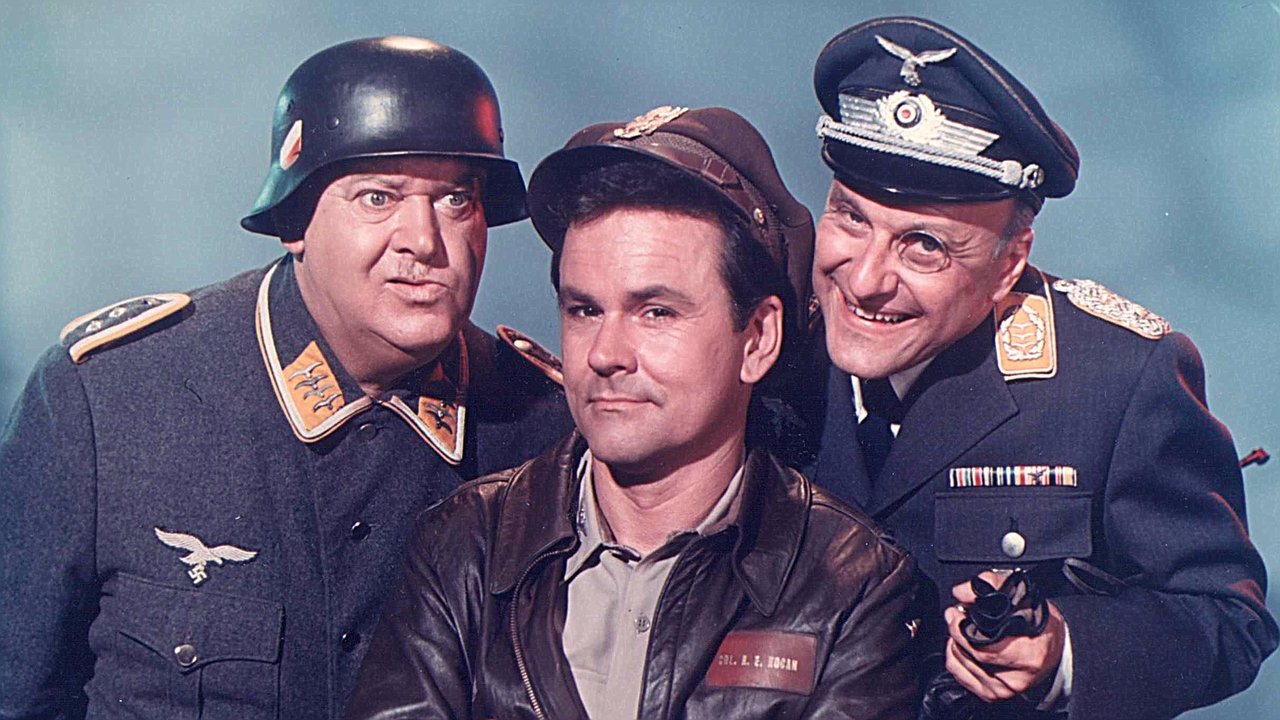
Hogan's Heroes is an American television sitcom that ran for 168 episodes from September 17, 1965, to July 4, 1971, on the CBS network. The show was set in a German prisoner of war camp during World War II. Bob Crane starred as Colonel Robert E. Hogan, coordinating an international crew of Allied prisoners running a Special Operations group from the camp. Werner Klemperer played Colonel Wilhelm Klink, the commandant of the camp, and John Banner was the inept sergeant-of-the-guard, Hans Schultz. The series was popular during its six-season run. In 2013, creators Bernard Fein through his estate and Albert S. Ruddy acquired the sequel and other separate rights to Hogan's Heroes from Mark Cuban through arbitration and a movie based on the show has been planned.

Country of origin
🇺🇸 United States
Year
1965
Created by
Bernard Fein, Albert S. Ruddy
Channel
CBS

Trivia & behind the scenes

/
Casting

Werner Klemperer, who played the bumbling Colonel Klink, came from a Jewish family that fled Nazi Germany in 1933; his father was famed conductor Otto Klemperer. He only accepted the role after being assured Klink would always be the buffoon and said he would quit if Klink were ever written as heroic.

Casting

John Banner (Sergeant Schultz) was Jewish and had emigrated from Austria to the U.S. in 1938 after the Nazi annexation, later serving as a sergeant in the U.S. Army during World War II.

Casting

Robert Clary (Corporal LeBeau) was a French Jew who survived three years in a Nazi concentration camp, where his parents and other family members were killed; he still bore his camp identity tattoo 'A-5714' on his arm.

Casting

All four actors playing the major German roles—Klemperer, Banner, Leon Askin (Burkhalter), and Howard Caine (Hochstetter)—were Jewish, and three of them had personally fled the Nazis before or during the war.

Casting

Ivan Dixon's casting as Sergeant Kinchloe, a positively portrayed African-American character, was considered a major step for mid-1960s television; his character's name referenced real Korean War flying ace Iven Kincheloe.

Filming

Although set in wintery Germany, the series was filmed in warm Southern California at Desilu Studios and the 40 Acres backlot in Culver City, forcing actors to wear heavy clothing and pretend to be cold.

Effects

The illusion of snow on the Stalag 13 set was created using salt during the first seasons, later replaced by a cheaper and more permanent white paint solution starting in the fourth season.

References

The pilot episode was tested in two versions, with and without a laugh track; the laugh track version tested far better, leading CBS to add laugh tracks to all its comedy programming afterward.

Reception

When the show finally aired in Germany in 1992 under the title 'Stacheldraht und Fersengeld,' it initially flopped due to lip-sync issues, but succeeded after being renamed 'Ein Käfig voller Helden' and redubbed with exaggerated Saxon and Bavarian accents for Klink and Schultz to make them look even more foolish.

Trivia

The play and film Stalag 17 authors sued Hogan's Heroes producer Bing Crosby for infringement; a jury initially ruled for the plaintiffs but a federal judge overturned the verdict, citing a striking difference in dramatic mood between the works.

Music

The theme music was composed by Jerry Fielding and performed on drums by star Bob Crane, who had started his career as a drummer; the opening drum riff is the same one used in the 1962 film The Longest Day.

What people are saying (0)

Log in to share your take.

No reviews yet.

Nothing yet. Start the conversation!

New version available

A Seenr update was just released. Reload to get it.