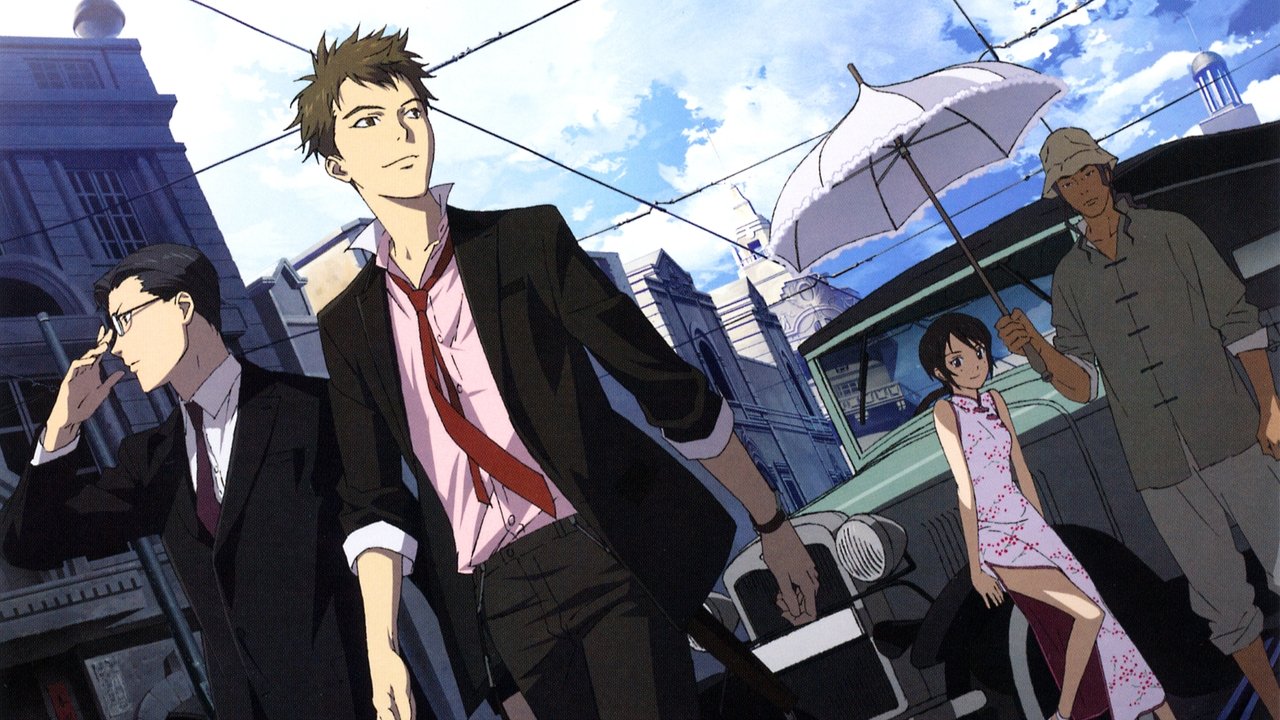
Night Raid 1931

Anime 2010 · 1 season · Drama
5.3 Modest

Series finished

Log in to follow
Animation Drama Action & Adventure Super Power Historical Foreign Military Espionage

Night Raid 1931, is a Japanese anime television series produced by A-1 Pictures and Aniplex and directed by Jun Matsumoto. The 13-episode anime aired in Japan on the TV Tokyo television network starting April 5, 2010. Senkō no Night Raid is the second project of Anime no Chikara. Sentai Filmworks acquired the series and released it on Blu-ray and DVD in August 2011.

Original title
閃光のナイトレイド
Country of origin
🇯🇵 Japan
Year
2010
Studio
A-1 Pictures
Channel
TV Tokyo

Trivia & behind the scenes

/
Origins

Night Raid 1931 is the second project in the 'Anime no Chikara' original anime initiative by TV Tokyo and Aniplex, following Sora no Woto. Unlike the other two Anime no Chikara series, it never received a manga adaptation.

Origins

The title 'Night Raid' was coined to evoke espionage imagery meaning 'night attack', while the Japanese prefix 'Senko' (flash) was chosen to represent the characters' psychic 'special abilities'.

Filming

Production was extremely rushed: at the time Sora no Woto ended its broadcast and previewed Night Raid 1931 as the next show, the first episode was still unfinished, forcing footage of staff meetings and production work to be used as filler in promotional CMs due to a shortage of completed animation.

Filming

The first episode was completed less than a week before its scheduled air date after the production schedule had to be adjusted.

Origins

The show was originally slated to be the third Anime no Chikara project but swapped broadcast order with Occult Academy due to various circumstances.

Filming

Because the story is set in a multilingual 1930s Shanghai, the voice cast recorded dialogue in multiple languages under language coaching, with Hiroyuki Yoshino, Yoshiko Ikuta and Daisuke Namikawa reporting particular difficulty mastering subtle Chinese pronunciation; Saki Fujita said that after her Chinese recording sessions her native Japanese pronunciation became temporarily shaky.

Filming

Episode 7 ('Incident'), set on the eve of the Mukden Incident, was pulled from television and BS broadcast for unspecified reasons and instead streamed exclusively on the official website via Bandai Channel, with a special compilation episode aired in its place.

Filming

Several episodes (0, 7, and 14, plus the special 'Devil of the Opium Den') were produced but never broadcast on TV, being included only on the Blu-ray and DVD releases; episode 14 was confirmed to be in production only after the TV broadcast had ended.

Music

The score includes an instrumental violin arrangement of Sergei Rachmaninoff's 'Vocalise', originally a vocal piece, used as an in-story musical performance.

References

The series' setting is grounded in real history, depicting pre-World War II Shanghai, the Kwantung Army, the Mukden Incident, the founding of Manchukuo, and the February 26 Incident, while featuring real historical figures such as Kanji Ishiwara, Seishiro Itagaki, and Puyi alongside fictional characters; each episode ends with a disclaimer noting it is a fictional interpretation and not new historical scholarship.

Reception

Sentai Filmworks licensed the series for North American Blu-ray and DVD release in August 2011, though that license later expired in 2018.

Reception

Anime News Network critics compared the show favorably to pulp espionage fiction like Ian Fleming's works and to Ghost in the Shell: Stand Alone Complex, praising its noir atmosphere and action scenes, though some felt the exposition was hard to follow and the musical score inconsistent.

What people are saying (0)

Log in to share your take.

No reviews yet.

Nothing yet. Start the conversation!

New version available

A Seenr update was just released. Reload to get it.