
Neon Genesis Evangelion

Mankind's greatest fear is mankind itself.

Anime 1995 · 1 season · Sci-Fi & Fantasy
9.1 Popular

Series finished

Log in to follow
Sci-Fi & Fantasy Animation Drama Philosophy Coming of Age Super Robot Dystopian Post-Apocalyptic Angels

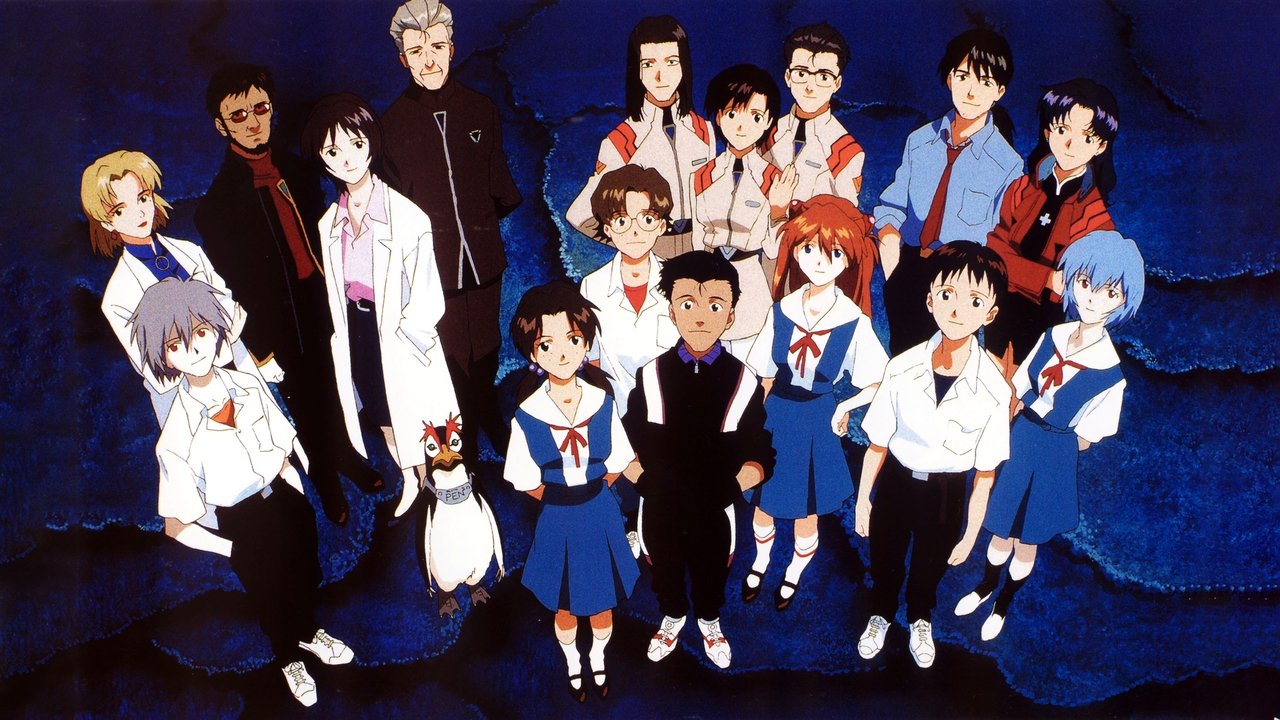
At the turn of the century, the Angels returned to Earth, seeking to wipe out humanity in an apocalyptic fury. Devastated, mankind's last remnants moved underground to wait for the day when the Angels would come back to finish the job. Fifteen years later, that day has come... but this time, humanity is ready to fight back with terrifying bio-mechanical weapons known as the Evangelions. Watch as Shinji, Rei, Asuka and the rest of the mysterious shadow agency Nerv battle to save earth from total annihilation.

Original title
新世紀エヴァンゲリオン
Country of origin
🇯🇵 Japan
Year
1995
Studios
Gainax · Tatsunoko Production
Channel
TV Tokyo

Trivia & behind the scenes

/
Origins

The project originated after Gainax's planned film 'Aoki Uru' (a sequel to Royal Space Force) was cancelled in 1993 due to financial issues, prompting Hideaki Anno to finally create his own original TV series.

Origins

Anno initially wanted the production to be based at another studio like Sunrise, but ultimately pitched the project back to Gainax itself, which accepted it.

Origins

The show's early concept had 28 Angels instead of 17, and the working title during development was 'Jinzō Ningen Evangelion' (Artificial Human Evangelion); an earlier rejected title candidate was 'Alcion' before 'Evangelion' was chosen because character designer Yoshiyuki Sadamoto felt it sounded stronger with its diacritical mark.

Origins

Anno originally intended to connect the series' universe with his previous show 'Nadia: The Secret of Blue Water,' including making Second Impact analogous to an event from Nadia, but this was abandoned because NHK, which owned Nadia's rights, would not grant permission.

Casting

Character designer Yoshiyuki Sadamoto persistently argued against Anno's initial idea of making the protagonist a girl (in the vein of Gunbuster), eventually convincing Anno to make the lead a boy, Shinji Ikari.

Casting

Anno was such a fan of 'Sailor Moon' that he cast Kotono Mitsuishi (voice of Sailor Moon) as Misato Katsuragi, named Rei Ayanami after the Sailor Moon character Rei Hino, and cast Megumi Ogata as Shinji after seeing her performance in a Sailor Moon movie.

References

Anno was deeply influenced by Go Nagai's works, stating the ending of the film version 'had to become Devilman,' and that Eva's entry plug concept was essentially a modern take on Mazinger Z's 'Pilder On' system.

Filming

At the start of the broadcast, only about half of the episodes had been storyboarded and just a handful of episodes were fully completed, forcing the remaining 14 episodes to be finished in about half a year under a very tight schedule.

Filming

Episode 11 was outsourced to Studio Ghibli staff, resulting in a noticeably different, more comedic and lighter art style and character portrayal compared to other episodes.

Reception

The controversial final two episodes, which abandoned conventional plot resolution for an introspective psychological narrative, provoked massive backlash from fans expecting a traditional ending, most notably a scathing critique by Eiji Otsuka published in the Yomiuri Shimbun calling it 'exactly like a self-help seminar.'

Music

The ending theme 'Fly Me to the Moon' was used in 14 different musical arrangements throughout the series, sung by various artists including opening vocalist Yoko Takahashi and voice actress Megumi Hayashibara (credited as 'Rei'), despite the visual animation always showing the same simple scene of Rei Ayanami rotating underwater.

Music

The opening theme 'A Cruel Angel's Thesis' was originally meant to be written by a different lyricist, but producer Toshimichi Otsuki ended up commissioning Neko Oikawa by chance when her manager visited King Records for unrelated business; singer Yoko Takahashi was likewise asked to perform it on the spot after coming in to record 'Fly Me to the Moon.'

Reception

The soundtrack album 'Neon Genesis Evangelion III' reached number one on Oricon's weekly album chart in June 1996, the first anime soundtrack to do so in 17 years since Galaxy Express 999.

Filming

Due to a New Year's schedule conflict, episode 14 aired at 8:30 am on TV Tokyo instead of its regular evening slot, causing many viewers to miss it and resulting in the lowest recorded rating of the series (0.9%).

Origins

Anno described the deadlock over how to end the story as needing to choose between three ways to 'fold up a spread-out furoshiki cloth': folding it properly, tearing it, or just throwing it away — and said Evangelion chose to 'tear it and throw it away.'

What people are saying (0)

Log in to share your take.

No reviews yet.

Nothing yet. Start the conversation!

New version available

A Seenr update was just released. Reload to get it.