Thunderbirds

Thunderbirds are Go!

1965 · 2 seasons · Family
7.6 Modest

Series finished

Log in to follow
Family Action & Adventure Animation Sci-Fi & Fantasy

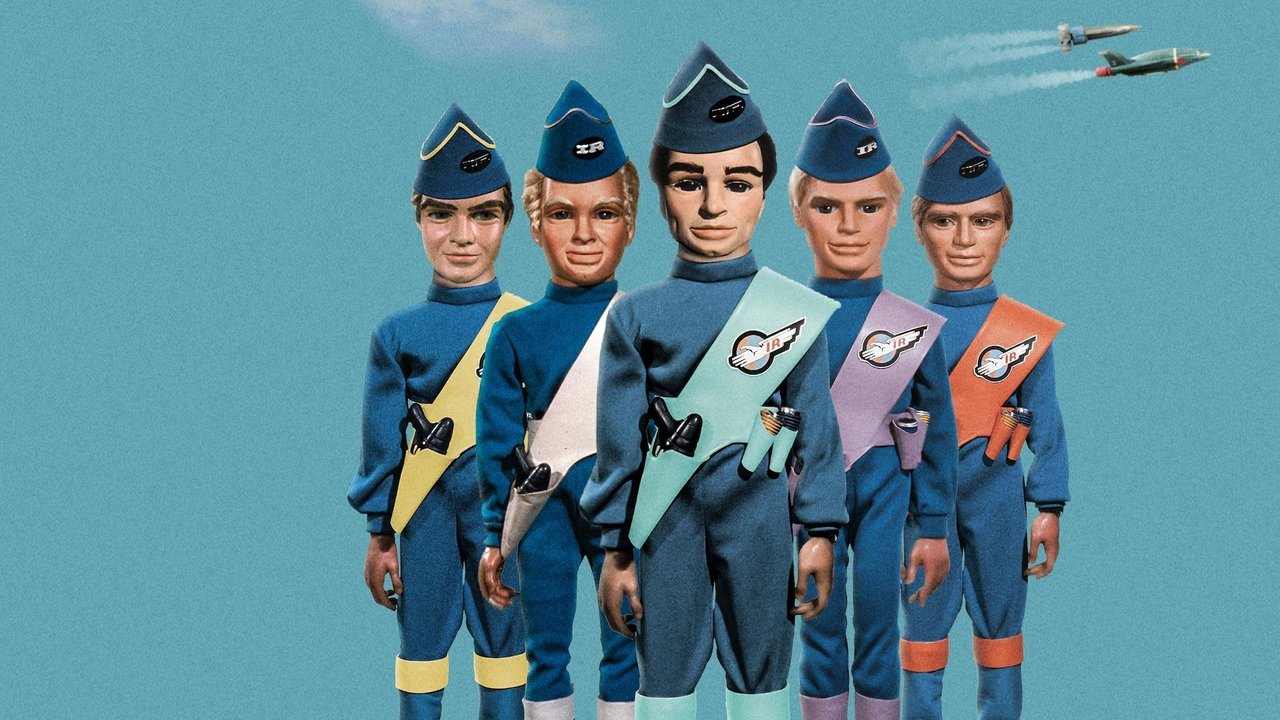
Thunderbirds is a 1960s British science-fiction television series which was produced using a mixed method of marionette puppetry and scale-model special effects termed "Supermarionation". The series is set in the 21st century and follows the exploits of International Rescue, a secret organization formed to save people in mortal danger with the help of technologically advanced land, sea, air and space vehicles and equipment, launched from a hidden base on Tracy Island in the South Pacific Ocean.

Country of origin
🇬🇧 United Kingdom
Year
1965
Created by
Gerry Anderson, Sylvia Anderson

Trivia & behind the scenes

/
Origins

The premise of Thunderbirds was inspired by the 1963 'Wunder von Lengede' (Miracle of Lengede), a real West German mining disaster where slow transport of rescue equipment hampered efforts to save trapped miners, sparking Gerry Anderson's idea of a fast-response international rescue organisation.

Origins

The choice to center the show on a father and his sons was influenced by the Western series Bonanza, and Sylvia Anderson believed using multiple heroic characters would broaden the show's appeal.

Origins

The Tracy brothers were named after real Mercury Seven astronauts: Scott Carpenter, John Glenn, Virgil 'Gus' Grissom, Gordon Cooper and Alan Shepard.

Origins

The series title came from a wartime letter Gerry Anderson received from his brother Lionel, who mentioned Thunderbird Field, a US Army Air Forces base in Arizona; the working title had been 'International Rescue' and the vehicles were originally called Rescues 1 to 5.

Casting

Gerry Anderson's first choice to voice Lady Penelope was actress Fenella Fielding, but Sylvia Anderson insisted on voicing the character herself, modelling her performance on Fielding and Joan Greenwood.

Casting

The Lady Penelope puppet's face was modelled on Sylvia Anderson, her own voice actress, though Anderson was initially unaware of this.

Casting

Puppet likenesses were based on real actors: Jeff Tracy on Lorne Greene, Scott on Sean Connery, Alan on Robert Reed, John on Adam Faith and Charlton Heston, Brains on Anthony Perkins, and Parker on Ben Warriss.

Casting

Gerry Anderson deliberately made the villain The Hood Asian and based him in Malaysia, wanting to avoid perpetuating the idea that Russia was the enemy amid Cold War sensitivities.

Filming

Each puppet had over 30 components including a solenoid in the head that synchronised the character's lip movements with pre-recorded dialogue, causing heads to be disproportionately large compared to the small torsos and limbs.

Filming

Because the puppets could not walk convincingly due to their low weight and single-wire-controlled legs, scenes were filmed from the waist up while a puppeteer held the legs out of shot and used a bobbing motion to simulate movement.

Effects

Impressed by the special effects work on Thunderbirds, director Stanley Kubrick hired several members of Derek Meddings' effects team to work on 2001: A Space Odyssey.

Effects

Rolls-Royce supervised construction of the seven-foot FAB 1 model and supplied a genuine radiator grille, asking in return that the miniature include a Spirit of Ecstasy hood ornament and that dialogue always refer to the car by its full name 'Rolls-Royce' rather than the abbreviation 'Rolls'.

Effects

Scale explosions were filmed at up to 120 frames per second and slowed to standard 24 fps to give an impression of greater weight and scale, using materials such as fuller's earth, petrol gel, magnesium strips and Cordtex explosive.

Trivia

Lew Grade doubled each episode's runtime from 25 to 50 minutes after being impressed by the pilot episode, forcing extensive rewrites and turning Thunderbirds into one of the most expensive TV series made up to that time, with a roughly £1 million budget for Series One.

Reception

Production ended in 1966 after Lew Grade failed to sell the series to any of the American 'big three' networks (NBC, CBS, ABC), who all withdrew their bids once NBC pulled out, leading Grade to cancel the show and commission Captain Scarlet and the Mysterons instead.

Music

An alternative closing theme song called 'Flying High', performed by Gary Miller with backing vocals by Ken Barrie, was recorded but ultimately replaced by a variation of 'The Thunderbirds March'.

What people are saying (0)

Log in to share your take.

No reviews yet.

Nothing yet. Start the conversation!

New version available

A Seenr update was just released. Reload to get it.