Heavy Metal L-Gaim

Anime 1984 · 1 season · Action & Adventure
6.2 Modest

Series finished

Log in to follow
Animation Action & Adventure Drama War Real Robot Space

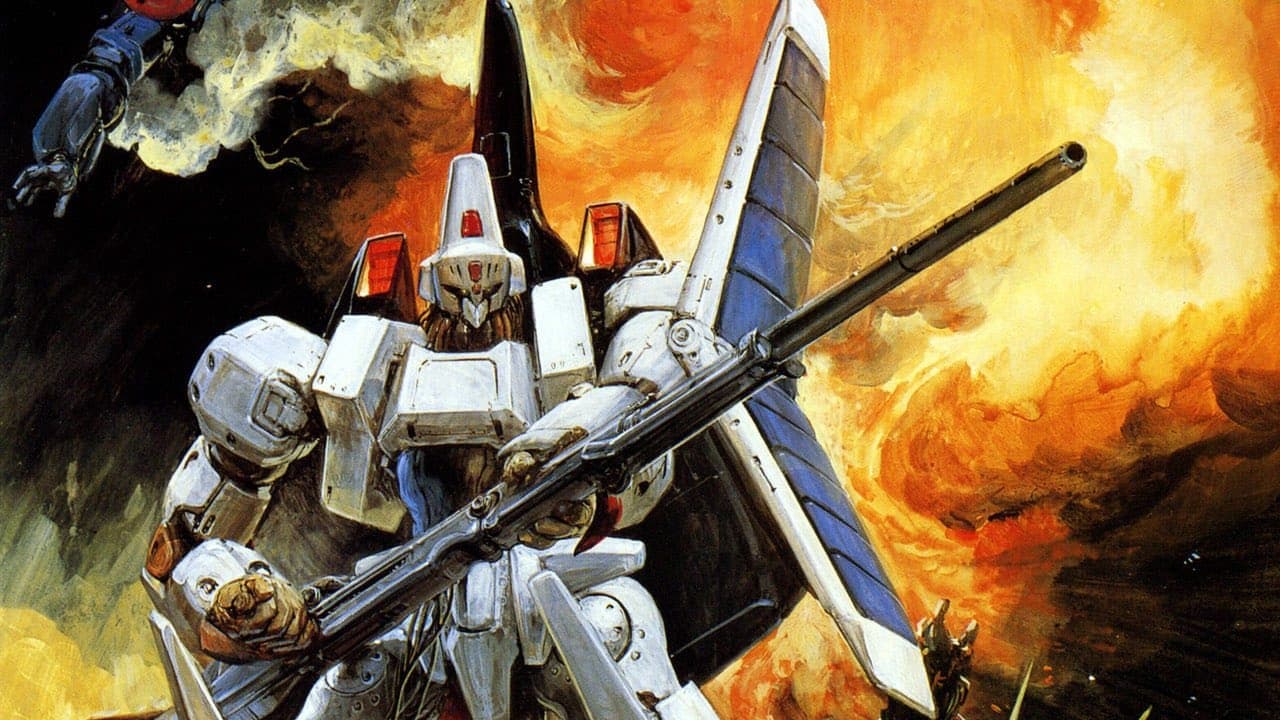
Heavy Metal L-Gaim is an anime television series, begun in 1984, which was directed by Yoshiyuki Tomino. Its characters and mecha were designed by Mamoru Nagano, who would later go on to create The Five Star Stories. Heavy Metal L-Gaim takes place in the Pentagona System, a solar system made up of five planets. Oldna Poseidal, the legendary emperor from the planet Gastogal leads his 24 Temple Knights from planet to planet until all have fallen under his control. His final victory is on the planet Mizum in 3975 when he defeats Kamon Walha V, ruler of the Yaman Clan. Kamon hides his heir, Kamon Myroad on the planet Mizum with the legendary white mecha, L-Gaim. Fifteen years later, now grown up and known as Daba Myroad, he leads a rebellion to free the planets of Pentagona from Poseidal's grasp.

Original title
重戦機エルガイム
Country of origin
🇯🇵 Japan
Year
1984
Studio
Sunrise

Trivia & behind the scenes

/
Origins

The series was produced as the follow-up to Aura Battler Dunbine, with director Yoshiyuki Tomino continuing from that previous work.

Origins

Tomino later stated that L-Gaim was 'half a sacrificial pawn before doing Gundam', since the planning for the follow-up series Mobile Suit Zeta Gundam had already started before this show even aired.

Origins

The total episode count was extended from a planned 50 episodes to 54; the episode 49 storming of the enemy headquarters was originally meant to be the finale before the extension.

Casting

22-year-old newcomer designer Mamoru Nagano was given the unprecedented role of handling both character design and mechanical design for a Sunrise robot anime, a first for the studio; Tomino had to convince a reluctant Sunrise to let a rookie handle both jobs after Nagano confidently claimed he could also draw characters.

References

The rebel-army-versus-Poseidal-empire structure and the light-sword 'Saber' weapons show similarities to Star Wars, which Nagano later cited as a favorite film that greatly influenced him.

Origins

Nagano proposed a human-machine hybrid organic computer concept called 'Fatima' for the Heavy Metals, but Tomino strongly rejected it, later issuing an official statement that 'Fatima does not exist in the world of L-Gaim'; the concept was later reused by Nagano in his manga Five Star Stories.

Origins

An earlier rejected concept had a robot-controlling female android named MARIA with an obviously mechanical face (unlike Fatima's human-like face), a design choice justified in-universe by the idea that women in this world would react badly to androids with fully human faces.

Music

The term 'Heavy Metal' for the robots is said to be a play on designer Nagano's love of heavy metal music combined with the US Army slang term for heavy tanks; director Tomino initially disliked the name, finding it embarrassing, and had considered calling them 'Frosser Silhouette' instead.

Casting

The character Lilith Fau closely resembles Chum Fau from the previous series Dunbine in both name and appearance; this was a deliberate choice by Tomino, who was fond of Chum Fau, and voice actress Mari Yamura (who had already been cast as Lessy) ended up voicing both Lilith and Lessy, adjusting her vocal pitch to distinguish the two roles.

Casting

Nagano based the character design of Gavlan Gabley on Chris Squire, the bassist of the band Yes, whom Nagano admired and used as his own nickname.

Trivia

The show's production connection led to real-life romance: voice actress Mari Yamura and designer Mamoru Nagano later married.

Filming

During production, designer Nagano was in a motorcycle accident, so animator Hiroyuki Kitazume took over the clean-up work on the Zedda mecha design in his place.

Effects

Nagano introduced the 'Movable Frame' concept, separating armor from the drive mechanism instead of the traditional monocoque structure where armor and skeleton were fused; this innovation was later reused in Mobile Suit Zeta Gundam.

Reception

A manga adaptation by Shigeto Ikehara, serialized in Comic BomBom, gave the story a completely different, fully happy ending than the TV series' more bittersweet conclusion, and this alternate ending has been praised by fans as 'another true ending' still discussed today.

References

According to Nagano, in a 1985 Newtype magazine feature, the entire story of L-Gaim was framed as a fairy tale unfolding inside a crystal ball owned by Jacoba Aon, leader of the fairies from Dunbine; as a fan-service nod, a Dunbine figure can be seen placed inside a ruined house in the series.

What people are saying (0)

Log in to share your take.

No reviews yet.

Nothing yet. Start the conversation!

New version available

A Seenr update was just released. Reload to get it.